Complete SPL Sections#
1 INDICATIONS AND USAGE
INDICATIONS & USAGE SECTION
Levetiracetam extended-release tablets are indicated for the treatment of partial-onset seizures in patients 12 years of age and older.
2 DOSAGE AND ADMINISTRATION
DOSAGE & ADMINISTRATION SECTION
3 DOSAGE FORMS AND STRENGTHS
DOSAGE FORMS & STRENGTHS SECTION
Levetiracetam extended-release tablets USP are white to off-white, oblong-shaped, film-coated extended-release tablets debossed with “CY 02” on one side and contain 750 mg levetiracetam.
4 CONTRAINDICATIONS
CONTRAINDICATIONS SECTION
Levetiracetam extended-release tablets are contraindicated in patients with a hypersensitivity to levetiracetam. Reactions have included anaphylaxis and angioedema [see Warnings and Precautions (5.4) ] .
5 WARNINGS AND PRECAUTIONS
WARNINGS AND PRECAUTIONS SECTION
6 ADVERSE REACTIONS
ADVERSE REACTIONS SECTION
The following adverse reactions are discussed in more details in other sections of labeling: • Behavioral abnormalities and Psychotic Symptoms [see Warnings and Precautions (5.1) ] • Suicidal Behavior and Ideation [see Warnings and Precautions (5.2) ] • Somnolence and Fatigue [see Warnings and Precautions (5.3) ] • Anaphylaxis and Angioedema [see Warnings and Precautions (5.4) ] • Serious Dermatological Reactions [see Warnings and Precautions (5.5) ] • Coordination Difficulties [see Warnings and Precautions (5.6) ] • Hematologic Abnormalities [see Warnings and Precautions (5.8) ]
8 USE IN SPECIFIC POPULATIONS
USE IN SPECIFIC POPULATIONS SECTION
10 OVERDOSAGE
OVERDOSAGE SECTION
11 DESCRIPTION
DESCRIPTION SECTION
Levetiracetam extended-release tablets are an antiepileptic drug available as 750 mg (white) extended-release tablets for oral administration. The chemical name of levetiracetam, a single enantiomer, is (-)-(S)-α-ethyl-2-oxo-1-pyrrolidine acetamide, its molecular formula is C 8 H 14 N 2 O 2 and its molecular weight is 170.21. Levetiracetam is chemically unrelated to existing antiepileptic drugs (AEDs). It has the following structural formula: Levetiracetam is a white to off-white crystalline powder with a faint odor and a bitter taste. It is very soluble in water (104.0 g/100 mL). It is freely soluble in chloroform (65.3 g/100 mL) and in methanol (53.6 g/100 mL), soluble in ethanol (16.5 g/100 mL), sparingly soluble in acetonitrile (5.7 g/100 mL) and practically insoluble in n-hexane. (Solubility limits are expressed as g/100 mL solvent.) Levetiracetam extended-release tablets USP contain the labeled amount of levetiracetam. Inactive ingredients: hypromellose, magnesium stearate, colloidal silicon dioxide, titanium dioxide, and triacetin. The medication is combined with a drug release controlling polymer that provides a drug release at a controlled rate. The biologically inert components of the tablet may occasionally remain intact during GI transit and will be eliminated in the feces as a soft, hydrated mass. FDA approved dissolution test specifications differ from USP.
12 CLINICAL PHARMACOLOGY
CLINICAL PHARMACOLOGY SECTION
13 NONCLINICAL TOXICOLOGY
NONCLINICAL TOXICOLOGY SECTION
14 CLINICAL STUDIES
CLINICAL STUDIES SECTION
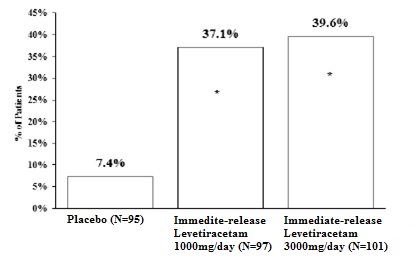
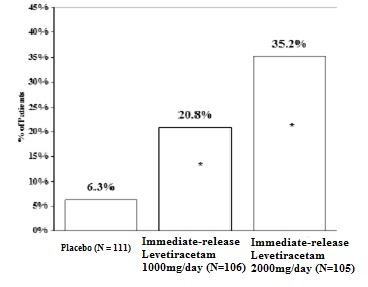
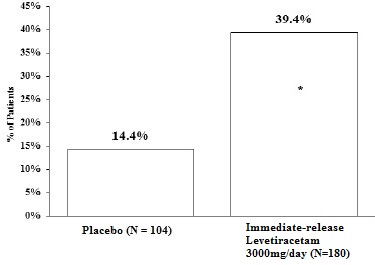
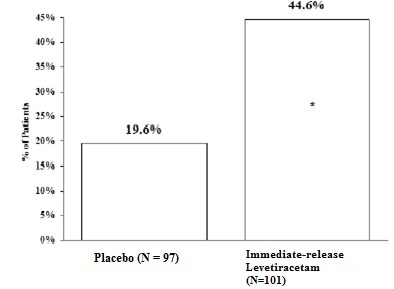
The effectiveness of levetiracetam extended-release tablets for the treatment of partial-onset seizures in adults was established in one multicenter, randomized, double-blind, placebo-controlled clinical study in patients who had refractory partial-onset seizures with or without secondary generalization. This was supported by the demonstration of efficacy of immediate-release levetiracetam tablets (see below) in partial seizures in three multicenter, randomized, double-blind, placebo-controlled clinical studies in adults, as well as a demonstration of comparable bioavailability between the XR and immediate-release formulations [see Clinical Pharmacology (12.3)] in adults. The effectiveness for levetiracetam extended-release tablets for the treatment of partial-onset seizures in pediatric patients, 12 years of age and older, was based upon a single pharmacokinetic study showing comparable pharmacokinetics of levetiracetam extended-release tablets in adults and adolescents [see Clinical Pharmacology (12.3)] . All studies are described below.
16 HOW SUPPLIED/STORAGE AND HANDLING
HOW SUPPLIED SECTION
17 PATIENT COUNSELING INFORMATION
INFORMATION FOR PATIENTS SECTION
Advise the patient to read the FDA-approved patient labeling (Medication Guide). Psychiatric Reactions and Changes in Behavior Advise patients that levetiracetam extended-release tablets may cause changes in behavior (e.g. irritability and aggression). In addition, patients should be advised that they may experience changes in behavior that have been seen with other formulations of levetiracetam, which include agitation, anger, anxiety, apathy, depression, hostility, and psychotic symptoms [see Warnings and Precautions (5.1) ] . Suicidal Behavior and Ideation Counsel patients, their caregivers, and/or families that antiepileptic drugs (AEDs), including levetiracetam extended-release tablets, may increase the risk of suicidal thoughts and behavior and advise patients to be alert for the emergence or worsening of symptoms of depression; unusual changes in mood or behavior; or suicidal thoughts, behavior, or thoughts about self-harm. Advise patients, their caregivers, and/or families to immediately report behaviors of concern to a healthcare provider [see Warnings and Precautions (5.2) ] . Effects on Driving or Operating Machinery Inform patients that levetiracetam extended-release tablets may cause dizziness and somnolence. Inform patients not to drive or operate machinery until they have gained sufficient experience on levetiracetam extended-release tablets to gauge whether it adversely affects their ability to drive or operate machinery [ see Warnings and Precautions (5.3) ]. Anaphylaxis and Angioedema Advise patients to discontinue levetiracetam extended-release tablets and seek medical care if they develop signs and symptoms of anaphylaxis or angioedema [see Warnings and Precautions (5.4) ] . Dermatological Adverse Reactions Advise patients that serious dermatological adverse reactions have occurred in patients treated with levetiracetam and instruct them to call their physician immediately if a rash develops [see Warnings and Precautions (5.5) ] . Dosing and Administration Patients should be instructed to only take levetiracetam extended-release tablets once daily and to swallow the tablets whole. They should not be chewed, broken, or crushed. Inform patients that they should not be concerned if they occasionally notice something that looks like swollen pieces of the original tablet in their stool. Withdrawal of levetiracetam Advise patients and caregivers not to discontinue use of levetiracetam extended-release tablets without consulting with their healthcare provider. Levetiracetam extended-release tablets should normally be gradually withdrawn to reduce the potential of increased seizure frequency and status epilepticus [see Warnings and Precautions (5.7) ] . Pregnancy Advise patients to notify their healthcare provider if they become pregnant or intend to become pregnant during levetiracetam therapy. Encourage patients to enroll in the North American Antiepileptic Drug(NAAED) pregnancy registry if they become pregnant [see Use in Specific Populations (8.1) ] . Levetiracetam extended-release tablets Manufactured for : Overseas Pharmaceuticals, Ltd. Guangzhou, Guangdong Province, China Manufactured by : Changzhou Pharmaceutical Factory No. 518, Laodong East Road, Changzhou, Jiangsu, China
MEDICATION GUIDE
SPL MEDGUIDE SECTION
Levetiracetam (lee" ve tye ra' se tam) Extended-Release Tablets, for oral use Read this Medication Guide before you start taking levetiracetam extended-release tablets and each time you get a refill. There may be new information. This information does not take the place of talking to your healthcare provider about your medical condition or treatment. What is the most important information I should know about levetiracetam extended-release tablets? Like other antiepileptic drugs, levetiracetam extended-release tablets may cause suicidal thoughts or actions in a very small number of people, about 1 in 500 people taking it. Call a healthcare provider right away if you have any of these symptoms, especially if they are new, worse, or worry you: thoughts about suicide or dying attempts to commit suicide new or worse depression new or worse anxiety feeling agitated or restless panic attacks trouble sleeping (insomnia) new or worse irritability acting aggressive, being angry, or violent acting on dangerous impulses an extreme increase in activity and talking (mania) other unusual changes in behavior or mood Do not stop levetiracetam extended-release tablets without first talking to a healthcare provider. Stopping levetiracetam extended-release tablets suddenly can cause serious problems. Stopping a seizure medicine suddenly can cause seizures that will not stop (status epilepticus). Suicidal thoughts or actions can be caused by things other than medicines. If you have suicidal thoughts or actions, your healthcare provider may check for other causes. How can I watch for early symptoms of suicidal thoughts and actions? Pay attention to any changes, especially sudden changes, in mood, behaviors, thoughts, or feelings. Keep all follow-up visits with your healthcare provider as scheduled. Call your healthcare provider between visits as needed, especially if you are worried about symptoms. What are levetiracetam extended-release tablets? Levetiracetam extended-release tablets are a prescription medicine taken by mouth that is used to treat partial-onset seizures in people 12 years of age and older. It is not known if levetiracetam extended-release tablets are safe or effective in people under 12 years of age. Before taking your medicine, make sure you have received the correct medicine. Compare the name above with the name on your bottle and the appearance of your medicine with the description of levetiracetam extended-release tablets provided below. Tell your pharmacist immediately if you think you have been given the wrong medicine. Who should not take levetiracetam extended-release tablets? Do not take levetiracetam extended-release tablets if you are allergic to levetiracetam. What should I tell my healthcare provider before starting levetiracetam extended-release tablets? Before taking levetiracetam extended-release tablets, tell your healthcare provider about all of your medical conditions, including if you: have or have had depression, mood problems or suicidal thoughts or behavior. have kidney problems. are pregnant or planning to become pregnant. It is not known if levetiracetam extended-release tablets will harm your unborn baby. You and your healthcare provider will have to decide if you should take levetiracetam extended-release tablets while you are pregnant. If you become pregnant while taking levetiracetam extended-release tablets, talk to your healthcare provider about registering with the North American Antiepileptic Drug Pregnancy Registry. You can enroll in this registry by calling 1-888-233-2334 or go to http://www.aedpregnancyregistry.org. The purpose of this registry is to collect information about the safety of levetiracetam extended-release tablets and other antiepileptic medicine during pregnancy. are breastfeeding or plan to breastfeed. Levetiracetam can pass into your breast milk. It is not known if the levetiracetam that passes into your breast milk can harm your baby. Talk to your doctor about the best way to feed your baby while you receive levetiracetam. Tell your healthcare provider about all the medicines you take, including prescription and over-the counter medicines, vitamins, and herbal supplements. Do not start a new medicine without first talking with your healthcare provider. Know the medicines you take. Keep a list of them to show your healthcare provider and pharmacist each time you get a new medicine. How should I take levetiracetam extended-release tablets? Take levetiracetam extended-release tablets exactly as your healthcare provider tells you to take it. Your healthcare provider will tell you how many levetiracetam extended-release tablets to take and when to take it. Levetiracetam extended-release tablets are usually taken 1 time each day. Your healthcare provider may change your dose. Do not change your dose without talking to your healthcare provider. Take levetiracetam extended-release tablets with or without food. Swallow the tablets whole. Do not chew, break, or crush tablets. The inactive part of levetiracetam extended-release tablets may not dissolve after all the medicine has been released in your body. You may sometimes notice something in your bowel movement that looks like swollen pieces of the original tablet. This is normal. If you take too many levetiracetam extended-release tablets, call your local Poison Control Center or go to the nearest emergency room right away. What should I avoid while taking levetiracetam extended-release tablets? Do not drive, operate machinery or do other dangerous activities until you know how levetiracetam extended-release tablets affect you. Levetiracetam extended-release tablets may make you dizzy or sleepy. What are the possible side effects of levetiracetam extended-release tablets? See “ What is the most important information I should know about levetiracetam extended-release tablets? ” Call your healthcare provider right away if you have any of these symptoms: mood and behavior changes such as aggression, agitation, anger, anxiety, apathy, mood swings, depression, hostility, and irritability. A few people may get psychotic symptoms such as hallucinations (seeing or hearing things that are really not there), delusions (false or strange thoughts or beliefs) and unusual behavior. extreme sleepiness, tiredness, and weakness. allergic reactions such as swelling of the face, lips, eyes, tongue, and throat, trouble swallowing or breathing, and hives. a skin rash. Serious skin rashes can happen after you start taking levetiracetam extended-release tablets. There is no way to tell if a mild rash will become a serious reaction. problems with muscle coordination (problems walking and moving). The most common side effects seen in people who take levetiracetam extended-release tablets include : sleepiness irritability Tell your healthcare provider if you have any side effect that bothers you or that does not go away. These are not all the possible side effects of levetiracetam extended-release tablets. For more information, ask your healthcare provider or pharmacist. Call your doctor for medical advice about side effects. You may also report side effects to FDA at 1-800- FDA-1088. How should I store levetiracetam extended-release tablets? Store levetiracetam extended-release tablets at room temperature, 59°F to 86°F (15°C to 30°C) away from heat and light. Keep levetiracetam extended-release tablets and all medicines out of the reach of children. General information about the safe and effective use of levetiracetam extended-release tablets. Medicines are sometimes prescribed for purposes other than those listed in a Medication Guide. Do not use levetiracetam extended-release tablets for a condition for which it was not prescribed. Do not give levetiracetam extended-release tablets to other people, even if they have the same symptoms that you have. It may harm them.You can ask your pharmacist or healthcare provider for information about levetiracetam extended-release tablets t...
Package label
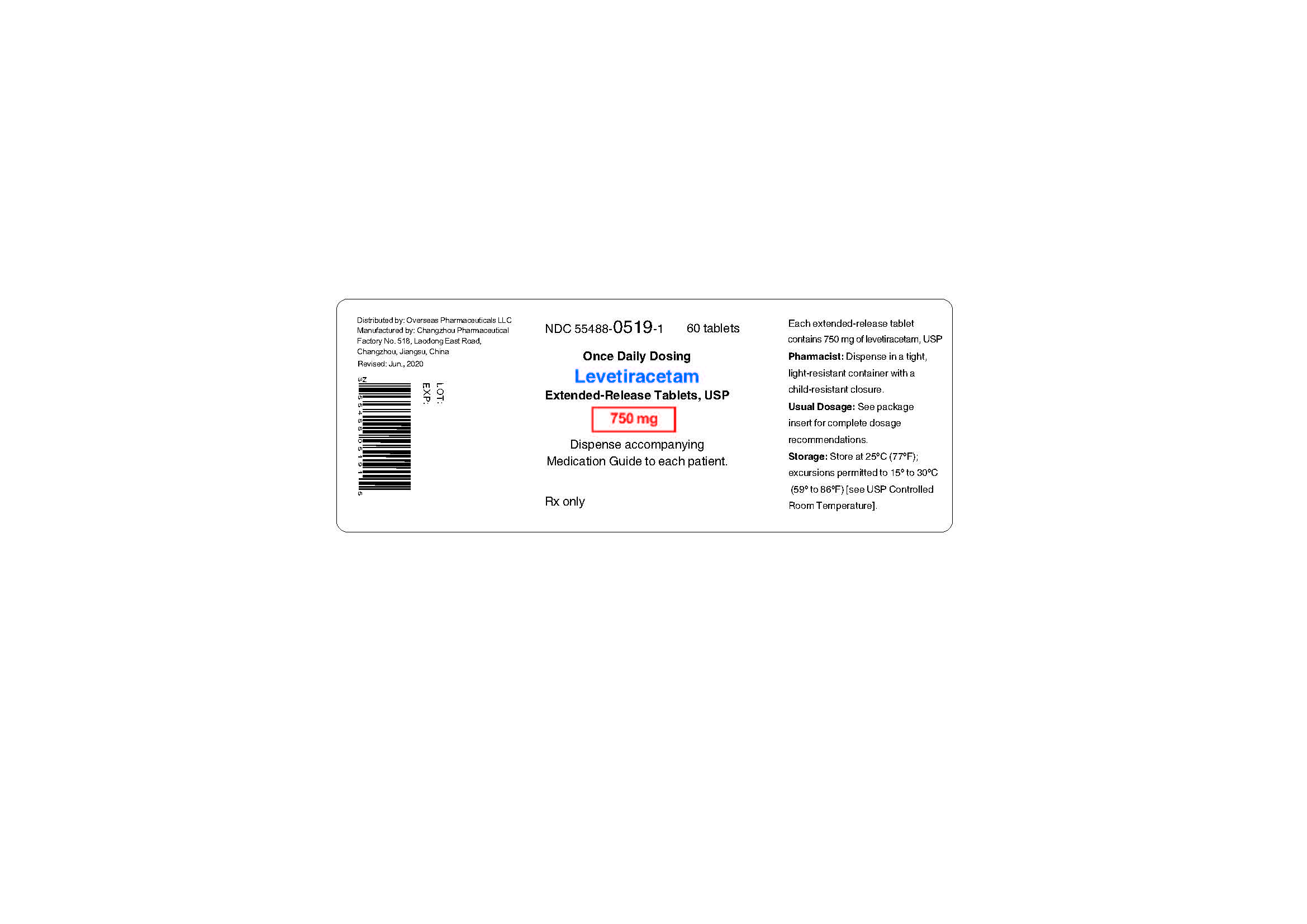
PACKAGE LABEL.PRINCIPAL DISPLAY PANEL
750 mg Tablet Bottle Label NDC 55488-519-06 60 tablets Levetiracetam Extended-Release Tablets USP 750 mg