SPL UNCLASSIFIED
Rx Only
Concentrated Dextrose for Intravenous Administration
NOTE: This solution is hypertonic − See
WARNINGS and
PRECAUTIONS.
Rx Only
Concentrated Dextrose for Intravenous Administration
NOTE: This solution is hypertonic − See
WARNINGS and
PRECAUTIONS.
50% Dextrose Injection, USP is a sterile, nonpyrogenic, hypertonic solution of dextrose in water for injection for intravenous injection as a fluid and nutrient replenisher.
Each mL of fluid contains 0.5 g dextrose, hydrous which delivers 3.4 kcal/gram. The solution has an osmolarity of 2.5 mOsmol/mL (calc.) and a pH of 3.2-6.5.
The solution contains no bacteriostat, antimicrobial agent or added buffer and is intended only for use as a single-dose injection. When smaller doses are required, the unused portion should be discarded with the entire unit.
Dextrose, USP is chemically designated C6H12O6 • H2O (D-glucose monohydrate), a hexose sugar freely soluble in water. Dextrose, hydrous has the following formula:
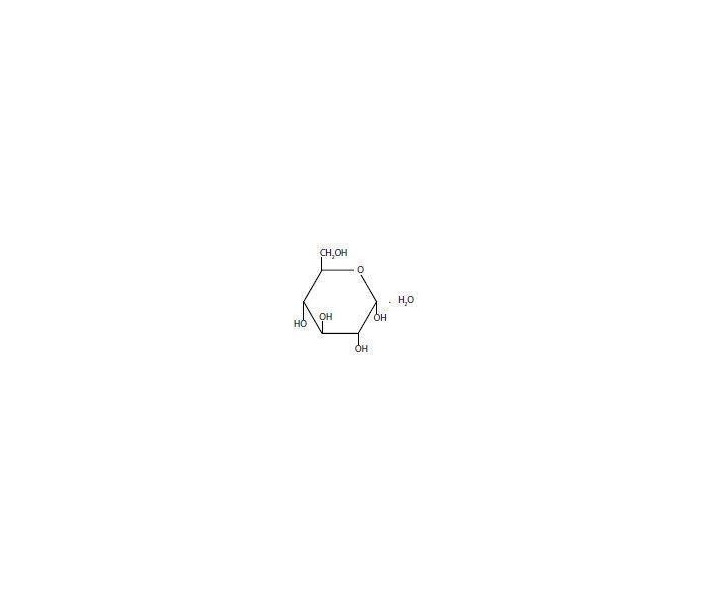
Water for Injection, USP is chemically designated H2O.
The delivery device is composed of a 50 mL glass syringe barrel with rubber stopper, and custom molded IMS injector with Luer Connector.
When administered intravenously this solution restores blood glucose levels in hypoglycemia and provides a source of carbohydrate calories.
Carbohydrate in the form of dextrose may aid in minimizing liver glycogen depletion and exerts a protein-sparing action. Dextrose injection undergoes oxidation to carbon dioxide and water.
Water is an essential constituent of all body tissues and accounts for approximately 70% of total body weight. Average normal adult requirement ranges from two to three liters (1.0 to 1.5 liters each for insensible water loss by perspiration and urine production).
Water balance is maintained by various regulatory mechanisms. Water distribution depends primarily on the concentration of electrolytes in the body compartments and sodium (Na+) plays a major role in maintaining physiologic equilibrium.
50% Dextrose Injection is indicated in the treatment of insulin hypoglycemia (hyperinsulinemia or insulin shock) to restore blood glucose levels.
The solution is also indicated, after dilution, for intravenous infusion as a source of carbohydrate calories in patients whose oral intake is restricted or inadequate to maintain nutritional requirements. Slow infusion of hypertonic solutions is essential to ensure proper utilization of dextrose and avoid production of hyperglycemia.
A concentrated dextrose solution should not be used when intracranial or intraspinal hemorrhage is present, nor in the presence of delirium tremens if the patient is already dehydrated.
Dextrose injection without electrolytes should not be administered simultaneously with blood through the same infusion set because of the possibility that pseudoagglutination of red cells may occur.
50% Dextrose Injection is hypertonic and may cause phlebitis and thrombosis at the site of injection.
Significant hyperglycemia and possible hyperosmolar syndrome may result from too rapid administration. The physician should be aware of the symptoms of hyperosmolar syndrome, such as mental confusion and loss of consciousness, especially in patients with chronic uremia and those with known carbohydrate intolerance.
The intravenous administration of this solution can cause fluid and/or solute overloading resulting in dilution of serum electrolyte concentrations, overhydration, congested states or pulmonary edema.
Additives may be incompatible. Consult with pharmacist if available. When introducing additives, use aseptic technique, mix thoroughly and do not store.
For peripheral vein administration:
The solution should be given slowly, preferably through a small bore needle into a large vein, to minimize venous irritation.
For central venous administration:
Concentrated dextrose should be administered via central vein only after suitable dilution.
Do not use unless the solution is clear and seal is intact. Discard unused portion.
Electrolyte deficits, particularly in serum potassium and phosphate, may occur during prolonged use of concentrated dextrose solutions. Blood electrolyte monitoring is essential and fluid and electrolyte imbalances should be corrected. Essential vitamins and minerals also should be provided as needed.
To minimize hyperglycemia and consequent glycosuria, it is desirable to monitor blood and urine glucose and if necessary, add insulin.
When a concentrated dextrose infusion is abruptly withdrawn, it is advisable to follow with the administration of 5% to 10% dextrose injection to avoid rebound hypoglycemia.
Solutions containing dextrose should be used with caution in patients with known subclinical or overt diabetes mellitus.
Care should be exercised to ensure that the needle is well within the lumen of the vein and that extravasation does not occur. If thrombosis should occur during administration, the injection should be stopped and corrective measures instituted.
Concentrated dextrose solutions should not be administered subcutaneously or intramuscularly.
Carcinogenesis, Mutagenesis, Impairment of Fertility:
Pregnancy Category C. Animal reproduction studies have not been conducted with dextrose. It is also not known whether dextrose can cause fetal harm when administered to a pregnant woman or can affect reproduction capacity. Dextrose should be given to a pregnant woman only if clearly needed.
Nursing Mothers:
It is not known whether this drug is excreted in human milk. Because many drugs are excreted in human milk, caution should be exercised when 50% Dextrose Injection, USP is administered to a nursing mother.
Hyperosmolar syndrome, resulting from excessively rapid administration of concentrated dextrose may cause mental confusion and/or loss of consciousness.
Reactions which may occur because of the solution or the technique of administration include febrile response, infection at the site of injection, venous thrombosis or phlebitis extending from the site of injection, extravasation and hypervolemia.
If an adverse reaction does occur, discontinue the infusion, evaluate the patient, institute appropriate therapeutic countermeasures and save the remainder of the fluid for examination if deemed necessary.
In the event of overhydration or solute overload during therapy, re-evalutate the patient and institute appropriate corrective measures. See WARNINGS AND PRECAUTIONS.
For peripheral vein administration:
Injection of the solution should be made slowly. The maximum rate at which dextrose can be infused without producing glycosuria is 0.5 g/kg of body weight/hour. About 95% of the dextrose is retained when infused at a rate of 0.8 g/kg/hr.
In insulin-induced hypoglycemia, intravenous injection of 10 to 25 grams of dextrose (20 to 50 mL of 50% dextrose) is usually adequate. Repeated doses and supportive treatment may be required in severe cases. A specimen for blood glucose determination should be taken before injecting the dextrose. In such emergencies, dextrose should be administered promptly without awaiting pretreatment test results.
For central vein administration:
For total parenteral nutrition 50% Dextrose Injection, USP is administered by slow intravenous infusion (a) after admixture with amino acid solutions via an indwelling catheter with the tip positioned in a large central vein, preferably the superior vena cava, or (b) after dilution with sterile water for injection. Dosage should be adjusted to meet individual patient requirements.
Clinical evaluation and periodic laboratory determinations are necessary to monitor changes in fluid balance, electrolyte concentrations and acid-base balance during prolonged parenteral therapy or whenever the condition of the patient warrants such evaluation.
The maximum rate of dextrose administration which does not result in glycosuria is the same as cited above.
Parenteral drug products should be inspected visually for particulate matter and discoloration prior to administration, whenever solution and container permit. See CONTRAINDICATIONS.
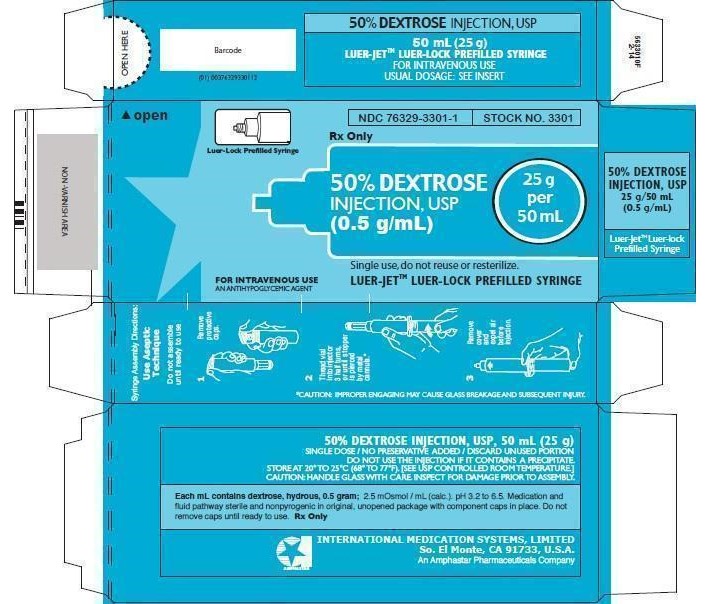
50% DEXTROSE INJECTION, USP is supplied in the following dosage forms.
NDC 51662-1380-1
50% DEXTROSE INJECTION, USP (0.5 g/mL) 25g per 50mL LUER-JET™ SYR
HF Acquisition Co LLC, DBA HealthFirst
Mukilteo, WA 98275
Also supplied in the following manufacture supplied dosage forms
50% DEXTROSE INJECTION, USP is supplied in single-dose containers as follows:

Ten cartons per package.
Syringe Assembly Directions:
USE ASEPTIC TECHNIQUE
Do not assemble until ready to use.

*CAUTION: IMPROPER ENGAGING MAY CAUSE GLASS BREAKAGE AND SUBSEQUENT INJURY.
Exposure of pharmaceutical products to heat should be minimized. Avoid excessive heat. Protect from freezing. Store at 20° to 25°C (68° to 77°F). [See USP Controlled Room Temperature.]
Revised 7/11
© International Medication Systems, Ltd., 2011
International Medication Systems, Ltd.
South El Monte, CA 91733, USA
An Amphastar Pharmaceuticals Company
Printed in USA


| Product concept | Relation | Version | Effective |
|---|---|---|---|
| cb89b86a-369e-4204-8910-ae797c503af3 | Product name | 1 | 20230706 |
| d4880ace-a516-8c47-8dfd-73a4ba5887d7 | Product name | 2 | 20180830 |
| 7cda52fc-125f-421c-8fea-bc1974370c49 | Product name | 2 | 20180703 |
| 0ca1d589-929b-4b33-bc5b-1d84abdafa6a | Product name | 1 | 20150324 |
| fc363c46-397b-4476-ac0f-70e43e8e4592 | Product name | 1 | 20150324 |
| ed912195-5da0-0f2f-6f4b-3ef17710cbe3 | Product name | 1 | 20140508 |
| Package NDC | Product | Description | Form | Quantity | Strength | SPL version |
|---|---|---|---|---|---|---|
| 51662-1380-1 | DEXTROSE | 1 in 1 CARTON | INJECTION | 1 | 5 | |
| 51662-1380-1 | DEXTROSE | 50 mL in 1 SYRINGE | INJECTION | 50 | 5 |
| NDC | Dashboard title | SPL version | Validation | Dashboard ZIP |
|---|---|---|---|---|
| 51662-1380 | DEXTROSE INJECTION [HF ACQUISITION CO LLC, DBA HEALTHFIRST] | 5 | Legacy NDC, 2 package rows | 20221211_96110249-e7c2-b7f5-e053-2a95a90a0d06.zip |
| Package NDC | Billing unit | Product NDC | DailyMed indexing SPL | SPL version | Effective |
|---|---|---|---|---|---|
| 76329-3301-1 | ML - Milliliter | 76329-3301 | b18b2d6f-2789-4664-bed3-b7fdb6212153 | 1 | 2013-02-13 |
Every source-derived product name is available through these pages.
| Product NDC | Package NDC |
|---|---|
| 51662-1380 | 51662-1380-1 |
| 76329-3301 |
Every source-derived ingredient row is available through these pages.
| Name | UNII | Kind |
|---|---|---|
| DEXTROSE MONOHYDRATE | LX22YL083G | ACTIB |
| WATER | 059QF0KO0R | IACT |
OpenFDA label data provides additional search and identifier links. DailyMed’s Structured Product Label is the canonical label on FDA.report. Matching records are deduplicated before they are shown below.
| Brand | Generic | Manufacturer | SPL set ID | Effective date | Available safety fields | Join |
|---|---|---|---|---|---|---|
| ef7bd5a0-02ac-7b66-e053-2995a90a8ffa | 96110249-e7c2-b7f5-e053-2a95a90a0d06 | 2022-12-10 | Warnings, Adverse reactions | ef7bd5a0-02ac-7b66-e053-2995a90a8ffa 96110249-e7c2-b7f5-e053-2a95a90a0d06 |
Adverse event summaries are temporarily unavailable. Other product information remains available.