FERABRIGHT- ferumoxytol injection
FeraBright by
Drug Labeling and Warnings
FeraBright by is a Prescription medication manufactured, distributed, or labeled by Azurity Pharmaceuticals, Inc.. Drug facts, warnings, and ingredients follow.
Drug Details [pdf]
-
HIGHLIGHTS OF PRESCRIBING INFORMATION
These highlights do not include all the information needed to use FERABRIGHT safely and effectively.
See full prescribing information for FERABRIGHT.
FERABRIGHTTM (ferumoxytol injection), for intravenous use
Initial U.S. Approval: 2009
WARNING: ANAPHYLAXIS AND OTHER SERIOUS HYPERSENSITIVITY REACTIONS
Fatal and serious hypersensitivity reactions, including anaphylaxis, have occurred in patients receiving ferumoxytol products that contain the same active ingredient as FERABRIGHT. Initial signs may include hypotension, syncope, unresponsiveness, and cardiac/cardiorespiratory arrest. Hypersensitivity reactions have occurred even in patients who previously tolerated ferumoxytol.
- Only administer FERABRIGHT as an intravenous infusion over at least 15 minutes and only when personnel and therapies are immediately available for the treatment of anaphylaxis and other hypersensitivity reactions.
- Observe for signs or symptoms of hypersensitivity reactions during and for at least 30 minutes following FERABRIGHT infusion including monitoring of blood pressure and pulse during and after FERABRIGHT administration. (5.1)
INDICATIONS AND USAGE
FERABRIGHT is an iron-based contrast agent indicated for magnetic resonance imaging (MRI) of the brain in adults with known or suspected malignant neoplasms in the brain to visualize lesions with a disrupted blood-brain barrier. (1)
DOSAGE AND ADMINISTRATION
- The recommended dose of FERABRIGHT is based on patient weight:
- 50 kg or less: 300 mg of elemental iron administered as a single intravenous infusion over at least 15 minutes.
- 51 kg or more: 510 mg of elemental iron administered as a single intravenous infusion over at least 15 minutes. (2.1)
- FERABRIGHT must be diluted before administration in either 0.9% sodium chloride injection or 5% dextrose injection to achieve concentrations of 2 mg/mL to 8 mg/mL of elemental iron. (2.2)
- Obtain post-contrast T1-weighted images approximately 24 hours after administration. (2.3)
DOSAGE FORMS AND STRENGTHS
Injection:
- 300 mg elemental iron per 10 mL (30 mg/mL) in single-dose vials
- 510 mg elemental iron per 17 mL (30 mg/mL) in single-dose vials (3)
CONTRAINDICATIONS
- Known hypersensitivity to ferumoxytol, any of FERABRIGHT’s components, or any other intravenous iron products (4)
WARNINGS AND PRECAUTIONS
- Hypotension: Monitor for signs and symptoms of hypotension following administration. (5.2)
- Iron Overload: Avoid use of FERABRIGHT in patients with iron overload. (5.3)
- Magnetic Resonance Imaging Test Interference: Conduct anticipated MRI studies (other than the intended FERABRIGHT brain imaging) prior to the administration of FERABRIGHT or use T1- or proton density-weighted pulse sequences if MRI is required within 3 months after administration. (5.4)
- Differences in Magnetic Resonance Imaging Appearance Compared to Gadolinium-Based Contrast: Be aware of the potentially limited interpretability of changes in lesion contrast appearance if prior images were not obtained with FERABRIGHT. (5.5)
ADVERSE REACTIONS
The most common adverse reactions (≥0.65%) are nausea, pruritus, constipation, headache, diarrhea, increased blood pressure, bleeding, hyperpigmentation, vein injury, taste alteration, burning/tingling sensation with injection, red sclera, allergic rhinitis, back pain, vomiting, and increased ALT. (6.1)
To report SUSPECTED ADVERSE REACTIONS, contact Azurity Pharmaceuticals, Inc. at 1-800-461-7449, or FDA at 1-800-FDA-1088 or www.fda.gov/medwatch.
See 17 for PATIENT COUNSELING INFORMATION and FDA-approved patient labeling.
Revised: 10/2025
-
Table of Contents
FULL PRESCRIBING INFORMATION: CONTENTS*
WARNING: ANAPHYLAXIS AND OTHER SERIOUS HYPERSENSITIVITY REACTIONS
1 INDICATIONS AND USAGE
2 DOSAGE AND ADMINISTRATION
2.1 Recommended Dosage and Administration Instructions
2.2 Dilution Instructions
2.3 Imaging
3 DOSAGE FORMS AND STRENGTHS
4 CONTRAINDICATIONS
5 WARNINGS AND PRECAUTIONS
5.1 Anaphylaxis and Other Serious Hypersensitivity Reactions
5.2 Hypotension
5.3 Iron overload
5.4 Magnetic Resonance Imaging Test Interference
5.5 Differences in Magnetic Resonance Imaging Appearance Compared to Gadolinium-Based Contrast
6 ADVERSE REACTIONS
6.1 Clinical Trials Experience
6.2 Postmarketing Experience
8 USE IN SPECIFIC POPULATIONS
8.1 Pregnancy
8.2 Lactation
8.4 Pediatric Use
8.5 Geriatric Use
10 OVERDOSAGE
11 DESCRIPTION
12 CLINICAL PHARMACOLOGY
12.1 Mechanism of Action
12.2 Pharmacodynamics
12.3 Pharmacokinetics
13 NONCLINICAL TOXICOLOGY
13.1 Carcinogenesis, Mutagenesis, Impairment of Fertility
14 CLINICAL STUDIES
16 HOW SUPPLIED/STORAGE AND HANDLING
17 PATIENT COUNSELING INFORMATION
- * Sections or subsections omitted from the full prescribing information are not listed.
-
BOXED WARNING
(What is this?)
WARNING: ANAPHYLAXIS AND OTHER SERIOUS HYPERSENSITIVITY REACTIONS
Fatal and serious hypersensitivity reactions, including anaphylaxis, have occurred in patients receiving ferumoxytol products that contain the same active ingredient as FERABRIGHT. Initial signs may include hypotension, syncope, unresponsiveness, and cardiac/cardiorespiratory arrest. Hypersensitivity reactions have occurred even in patients who previously tolerated ferumoxytol.
- Only administer FERABRIGHT as an intravenous infusion over at least 15 minutes and only when personnel and therapies are immediately available for the treatment of anaphylaxis and other hypersensitivity reactions.
- Observe for signs or symptoms of hypersensitivity reactions during and for at least 30 minutes following FERABRIGHT infusion including monitoring of blood pressure and pulse during and after FERABRIGHT administration [see Warnings and Precautions (5.1)].
- 1 INDICATIONS AND USAGE
-
2 DOSAGE AND ADMINISTRATION
2.1 Recommended Dosage and Administration Instructions
- The recommended dose of FERABRIGHT is based on patient body weight as follows:
- Administer diluted FERABRIGHT by intravenous infusion over at least 15 minutes while the patient is in a reclined or semi-reclined position approximately 24 hours prior to imaging [see Clinical Pharmacology (12.1)].
- Allow at least 30 minutes after FERABRIGHT infusion for administration of any other medications that may cause serious hypersensitivity reactions or hypotension (e.g., chemotherapeutic agents or monoclonal antibodies) [see Warnings and Precautions (5.1, 5.2)].
2.2 Dilution Instructions
- To achieve a final concentration of 2 mg/mL to 8 mg/mL of elemental iron, add the recommended dose of FERABRIGHT to 0.9% sodium chloride injection or 5% dextrose injection as follows:
- For a 300 mg dose, add 10 mL of FERABRIGHT to 50 mL to 140 mL diluent.
- For a 510 mg dose, add 17 mL of FERABRIGHT to 50 mL to 200 mL diluent.
- Inspect diluted FERABRIGHT visually for the absence of particulate matter and discoloration prior to administration.
- Use diluted FERABRIGHT solution immediately. If not used immediately, store the diluted FERABRIGHT solution at controlled room temperature (25°C ± 2°C) for up to 4 hours or refrigerated (2°C to 8°C) for up to 48 hours.
- Each vial of FERABRIGHT is for a single dose. Discard any unused portion.
- 3 DOSAGE FORMS AND STRENGTHS
-
4 CONTRAINDICATIONS
FERABRIGHT is contraindicated in patients with known hypersensitivity to ferumoxytol, any of FERABRIGHT’s components, or any other intravenous iron products. Reactions have included anaphylaxis [see Warnings and Precautions (5.1)].
-
5 WARNINGS AND PRECAUTIONS
5.1 Anaphylaxis and Other Serious Hypersensitivity Reactions
Fatal and serious hypersensitivity reactions, including anaphylaxis presenting with cardiac/cardiorespiratory arrest, clinically significant hypotension, syncope, or unresponsiveness, have occurred in patients receiving ferumoxytol products, which contain the same active ingredient as FERABRIGHT. Other adverse reactions potentially associated with hypersensitivity have occurred, including pruritus, rash, urticaria, and wheezing. These reactions have occurred in patients who had no prior exposure to ferumoxytol as well as in patients who previously tolerated ferumoxytol.
Patients with a history of multiple drug allergies may have a greater risk of anaphylaxis with FERABRIGHT. Elderly patients with multiple or serious co-morbidities who experience hypersensitivity reactions and/or hypotension following administration of ferumoxytol including FERABRIGHT may have more severe outcomes. Carefully consider the potential risks and benefits before administering FERABRIGHT to these patients. FERABRIGHT is contraindicated in patients with known hypersensitivity to ferumoxytol, any of FERABRIGHT’s components, or any other intravenous iron products [see Contraindications (4)].
Only administer FERABRIGHT as an intravenous infusion over at least 15 minutes and only when personnel and therapies are immediately available for the treatment of anaphylaxis and other hypersensitivity reactions. Closely observe patients for signs and symptoms of hypersensitivity including monitoring of blood pressure and pulse during and after FERABRIGHT administration for at least 30 minutes and until clinically stable following completion of infusion. Allow at least 30 minutes after FERABRIGHT infusion for administration of any other medications that may cause serious hypersensitivity reactions or hypotension [see Dosage and Administration (2.1)].
In a clinical study in patients with iron deficiency anemia (IDA) (FERABRIGHT is not approved to treat IDA), regardless of etiology, hypersensitivity reactions were reported in 0.4% (4/997) of patients administered ferumoxytol as an intravenous infusion over at least 15 minutes. These included one patient with severe hypersensitivity reaction and three patients with moderate hypersensitivity reactions.
In clinical studies predominantly in patients with IDA and chronic kidney disease (CKD) (FERABRIGHT is not approved to treat IDA or CKD), serious hypersensitivity reactions were reported in 0.2% (4/1,806) of patients administered ferumoxytol as a rapid intravenous injection (not an approved method of administration for FERABRIGHT). Other adverse reactions potentially associated with hypersensitivity (e.g., pruritus, rash, urticaria, or wheezing) were reported in 3.5% (63/1,806) of these patients.
In postmarketing experience with ferumoxytol, fatal and serious anaphylactic type reactions presenting with cardiac/cardiorespiratory arrest, clinically significant hypotension, syncope, and unresponsiveness have been reported [see Adverse Reactions (6.2)].5.2 Hypotension
FERABRIGHT may cause clinically significant hypotension. Monitor patients for signs and symptoms of hypotension following FERABRIGHT administration [see Dosage and Administration (2.1) and Warnings and Precautions (5.1)].
In a clinical study in patients with IDA (FERABRIGHT is not approved to treat IDA), moderate hypotension was reported in 0.2% (2/997) of patients administered ferumoxytol as an intravenous infusion over 15 minutes.
In clinical studies in patients with IDA and CKD (FERABRIGHT is not approved to treat IDA or CKD), hypotension was reported in 1.9% (35/1,806) of patients, including three patients with serious hypotensive reactions, who were administered ferumoxytol as a rapid intravenous injection (not an approved method of administration for FERABRIGHT). Hypotension has also been reported in postmarketing experience [see Adverse Reactions (6.2)].5.3 Iron overload
Use of FERABRIGHT can lead to excess storage of iron with the possibility of iatrogenic hemosiderosis. Avoid use of FERABRIGHT in patients with iron overload.
5.4 Magnetic Resonance Imaging Test Interference
Administration of FERABRIGHT may transiently affect the diagnostic ability of MRI. Conduct anticipated MRI studies (other than the intended FERABRIGHT brain imaging) prior to the administration of FERABRIGHT. Alteration of MRI studies may persist for up to 3 months following the FERABRIGHT dose. If MRI is required within 3 months after FERABRIGHT administration, use T1- or proton density-weighted pulse sequences to minimize the FERABRIGHT effects. MRI imaging using T2-weighted pulse sequences should not be performed earlier than 4 weeks after the administration of FERABRIGHT. Maximum alteration of vascular MRI signal is evident for 1 to 2 days following FERABRIGHT administration [see Clinical Pharmacology (12.3)].
FERABRIGHT will not interfere with X-ray, computed tomography (CT), positron emission tomography (PET), single photon emission computed tomography (SPECT), planar nuclear medicine imaging, or ultrasound.5.5 Differences in Magnetic Resonance Imaging Appearance Compared to Gadolinium-Based Contrast
MRI obtained with FERABRIGHT may demonstrate different size, intensity, and pattern of contrast signal in lesions compared to images obtained with gadolinium-based contrast [see Clinical Studies (14)]. Be aware of the potentially limited interpretability of changes in lesion contrast appearance if prior images were not obtained with FERABRIGHT.
-
6 ADVERSE REACTIONS
The following clinically significant adverse reactions are described elsewhere in the labeling:
- Anaphylaxis and Other Serious Hypersensitivity Reactions [see Warnings and Precautions (5.1)]
- Hypotension [see Warnings and Precautions (5.2)]
6.1 Clinical Trials Experience
Because clinical trials are conducted under widely varying conditions, adverse reaction rates observed in the clinical trials of a drug cannot be directly compared to rates in the clinical trials of another drug and may not reflect the rates observed in practice.
The safety of FERABRIGHT was evaluated in three blinded read studies (Study 001, Study 002, and Study 003) in 225 patients with known or suspected neoplasms in the brain who received FERABRIGHT by intravenous infusion for MRI.
In Study 001, 153 patients weighing between 45 kg and 140 kg received a FERABRIGHT median dose of 506 mg [see Clinical Studies (14)]. The 510 mg dose is recommended in patients weighing 51 kg or more [see Dosage and Administration (2.1)]. The mean (range) age was 52 (18 to 83) years; patients were 57% male, 92% White, 2% Black or African American, 3% Asian, 1% American Indian or Alaska Native, 2% of other race, and 93% Not Hispanic or Latino ethnicity.
In Study 002, 17 patients weighing between 60 kg and 135 kg received a FERABRIGHT median dose of 435 mg. Doses below 510 mg are not recommended in patients weighing 51 kg or more [see Dosage and Administration (2.1)]. The mean (range) age was 52 (32 to 72) years; patients were 65% male, 100% White, and 100% Not Hispanic or Latino ethnicity.
In Study 003, 55 patients weighing between 62 kg and 129 kg received a FERABRIGHT median dose of 312 mg. Doses below 510 mg are not recommended in patients weighing 51 kg or more [see Dosage and Administration (2.1)]. The mean (range) age was 51 (23 to 73) years; patients were 64% male, 91% White, 4% Asian, 2% Native Hawaiian or Other Pacific Islander, 4% of other race, and 93% Not Hispanic or Latino ethnicity.
Adverse reactions reported in patients (≥0.65%) in Study 001 are shown in Table 1.
Table 1: Adverse Reactions Reported in Brain Neoplasm Patients who Received FERABRIGHT for MRI in Study 001**Median dose of 506 mg. The 510 mg dose is recommended in patients weighing 51 kg or more [see Dosage and Administration (2.1)]. Adverse Reaction FERABRIGHT
(N = 153)
n (%)
Nausea
Pruritus
Constipation
Headache
Diarrhea
Increased blood pressure
Bleeding
Hyperpigmentation
Vein injury
Taste alteration
Burning/tingling sensation with injection
Red sclera
Allergic rhinitis
3 (1.96%)
2 (1.31%)
2 (1.31%)
1 (0.65%)
1 (0.65%)
1 (0.65%)
1 (0.65%)
1 (0.65%)
1 (0.65%)
1 (0.65%)
1 (0.65%)
1 (0.65%)
1 (0.65%)
Additional adverse reactions reported in Studies 002 and 003 were back pain (3 patients), vomiting (1 patient), and increased ALT (1 patient).
Additional adverse reactions reported in ≥1% of patients with IDA (FERABRIGHT is not approved to treat IDA) in a randomized clinical trial that administered two doses of 510 mg ferumoxytol 3 to 8 days apart by intravenous infusion (not an approved dosing regimen for FERABRIGHT) were dizziness and fatigue.
Additional adverse reactions reported in ≥1% of patients with IDA and CKD (FERABRIGHT is not approved to treat IDA or CKD) in three randomized clinical trials that administered two doses of 510 mg ferumoxytol 3 to 8 days apart by rapid intravenous injection (not an approved dosing regimen for FERABRIGHT) were peripheral edema, edema, abdominal pain, cough, pyrexia, dyspnea, and muscle spasm.6.2 Postmarketing Experience
The following adverse reactions have been identified during post-approval use of ferumoxytol products, which contain the same active ingredient as FERABRIGHT. Because these reactions are reported voluntarily from a population of uncertain size, it is not always possible to reliably estimate their frequency or establish a causal relationship to drug exposure.
Cardiovascular disorders: cardiac/cardiorespiratory arrest, ischemic myocardial events, acute myocardial ischemia with or without myocardial infarction or with in-stent thrombosis in the context of a hypersensitivity reaction, congestive heart failure, clinically significant hypotension, tachycardia/rhythm abnormalities
General disorders and administration site conditions: cyanosis
Immune system disorders: anaphylaxis and hypersensitivity reactions
Nervous system disorders: syncope, unresponsiveness, loss of consciousness
Skin and system disorders: angioedema
These adverse reactions have usually occurred within 30 minutes after the administration of ferumoxytol. -
8 USE IN SPECIFIC POPULATIONS
8.1 Pregnancy
Risk Summary
Limited available data with ferumoxytol use in pregnant women are insufficient to inform a drug associated risk of adverse developmental outcomes. There are risks to the fetus associated with maternal severe hypersensitivity reactions (see Clinical Considerations). In animal studies, administration of ferumoxytol to pregnant rabbits during organogenesis caused adverse developmental outcomes including fetal malformations and decreased fetal weights at maternally toxic doses of 6 times the estimated human daily dose.
The estimated background risk of major birth defects and miscarriage for the indicated populations is unknown. All pregnancies have a background risk of birth defect, loss, or other adverse outcomes. In the U.S. general population, the estimated background risk of major birth defect and miscarriage in clinically recognized pregnancies is 2% to 4% and 15% to 20%, respectively.
Clinical Considerations
Fetal/Neonatal adverse reactions
Severe adverse reactions including circulatory failure (severe hypotension, shock including in the context of anaphylactic reaction) may occur in pregnant women with intravenous iron products (such as FERABRIGHT), which may cause fetal bradycardia, especially during the second and third trimester.
Data
Animal Data
Administration of ferumoxytol during organogenesis, at doses of 31.6 mg Fe/kg/day in rats and 16.5 mg Fe/kg/day in rabbits, did not result in maternal or fetal effects. These doses are approximately 2 times the estimated human daily dose based on body surface area. In rats, administration of ferumoxytol during organogenesis at a maternally toxic dose of 100 mg Fe/kg/day, approximately 6 times the estimated human daily dose based on body surface area, caused a decrease in fetal weights. In rabbits, administration of ferumoxytol during organogenesis at a maternally toxic dose of 45 mg Fe/kg/day, approximately 6 times the estimated human daily dose based on body surface area, was associated with external and soft tissue fetal malformations and decrease in fetal weights.8.2 Lactation
Risk Summary
There are no data on the presence of ferumoxytol in human milk, the effects on the breastfed child, or the effects on milk production. Ferumoxytol has been detected in the milk of lactating rats. However, due to species-specific differences in lactation physiology, the clinical relevance of these data is not clear. The developmental and health benefits of breastfeeding should be considered along with the mother’s clinical need for FERABRIGHT and any potential adverse effects on the breastfed child from FERABRIGHT or from the underlying maternal condition.8.4 Pediatric Use
The safety and effectiveness of FERABRIGHT in pediatric patients (less than 18 years old) have not been established.
8.5 Geriatric Use
Of the total number of patients administered FERABRIGHT in the brain MRI re-read studies, 40 (18%) were 65 years of age and older, and 8 (4%) were 75 years of age and older [see Adverse Reactions (6.1)]. No overall differences in safety or effectiveness were observed between these patients and younger patients, and other reported clinical experience has not identified differences between the elderly and younger patients.
Elderly patients with multiple or serious co-morbidities who experience hypersensitivity reactions and/or hypotension following administration of FERABRIGHT may have more severe outcomes. In general, dose administration to an elderly patient should be cautious, reflecting the greater frequency of decreased hepatic, renal, or cardiac function, and of concomitant disease or other drug therapy [see Warnings and Precautions (5.1)]. -
10 OVERDOSAGE
Excessive dosages of FERABRIGHT may lead to accumulation of iron in storage sites potentially leading to hemosiderosis [see Warnings and Precautions (5.3)].
Ferumoxytol is not removed by hemodialysis. -
11 DESCRIPTION
FERABRIGHT (ferumoxytol injection) is an iron-based contrast agent for intravenous use.
Ferumoxytol is a non-stoichiometric magnetite (superparamagnetic iron oxide) coated with polyglucose sorbitol carboxymethylether. The overall colloidal particle size ranges from 31 nm to 43 nm in diameter. The chemical formula of ferumoxytol is Fe5874O8752-C11719H18682O9933Na414 with an apparent molecular weight of 750 kDa.
Each mL contains 30 mg of elemental iron and 30 mg of polyglucose sorbitol carboxymethylether as ferumoxytol, and 44 mg of mannitol. It contains no preservatives.
FERABRIGHT is a sterile, aqueous, black to reddish brown, isotonic colloidal solution with an osmolality of 270 mOsm/kg to 330 mOsm/kg, magnetic susceptibility of 27,250 to 39,000 x 10-6 cgs/g Fe, and a pH of 6 to 8. -
12 CLINICAL PHARMACOLOGY
12.1 Mechanism of Action
Ferumoxytol is a superparamagnetic iron oxide coated with a carbohydrate shell that develops a magnetic moment when placed in a magnetic field. The magnetic moment alters the relaxation rates of water protons in its vicinity in the body, leading to an increase in signal intensity (brightness) of tissues on T1-weighted MRI. Disruption of the blood-brain barrier allows distribution of ferumoxytol into lesions such as neoplasms. Since extravasation of the large ferumoxytol molecules is slow, parenchymal enhancement is seen in the delayed phase, approximately 24 hours post-administration of FERABRIGHT.
12.2 Pharmacodynamics
Ferumoxytol exposure-response relationships and the time course of pharmacodynamic response are unknown.
Cardiac Electrophysiology
In a randomized, positive- and placebo-controlled, parallel-group study, healthy subjects received rapid intravenous injection of two 510 mg doses of ferumoxytol within 24 hours (not an approved dosing regimen for FERABRIGHT), placebo, or a single dose of 400 mg moxifloxacin (positive control). Results demonstrated no effect of ferumoxytol on QT interval durations. No clinically meaningful effect of ferumoxytol on heart rate was observed.12.3 Pharmacokinetics
Ferumoxytol maximum concentration (Cmax) increases proportionally and area under the concentration-time curve (AUC) increases more than proportionally over a dose range from 1 mg/kg (70 mg in a patient with body weight of 70 kg- not an approved dosing regimen for FERABRIGHT) to 510 mg elemental iron. Rate of infusion ranging from 2 mL/min to 60 mL/min has no significant influence on pharmacokinetics (PK) of ferumoxytol.
Distribution
The volume of distribution is 3.4 L.
Elimination
Ferumoxytol exhibits dose-dependent, capacity-limited elimination from plasma. Terminal half-life increases by increasing the dose of ferumoxytol. Terminal half-life is approximately 21 hours after a single 510 mg elemental iron dose.
Specific Populations
Ferumoxytol clearance increases with body weight. There are no clinically significant differences in the PK of ferumoxytol based on age (18 to 77 years), sex, race (Black or White), or renal function (CLcr: 4.9 to 188 mL/min). -
13 NONCLINICAL TOXICOLOGY
13.1 Carcinogenesis, Mutagenesis, Impairment of Fertility
Carcinogenesis
Ferumoxytol was not tested for carcinogenic effects.
Mutagenesis
In standard genotoxicity tests, ferumoxytol showed no evidence of mutagenic activity in an in vitro Ames test or clastogenic activity in either an in vitro chromosomal aberration assay or an in vivo micronucleus assay.
Impairment of Fertility
Ferumoxytol had no effect on male or female fertility or general reproductive function in rats.
In a prenatal and postnatal development study in rats, intravenous administration of ferumoxytol from gestation day 6 until lactation day 20 at doses up to 60 mg Fe/kg/day (approximately 3 times the daily human dose based on body surface area comparisons assuming a 60-kg person) had no effect on maternal delivery or numbers of liveborn offspring. Male offspring (F1) of pregnant rats (F0) administered ferumoxytol at a dose of 60 mg Fe/kg/day had delayed sexual maturation and decreased reproductive competence. Female offspring (F1) of pregnant rats (F0) administered ferumoxytol at doses of 30 mg Fe/kg/day or 60 mg Fe/kg/day had delayed sexual maturation and decreased reproductive competence. Doses of 30 mg Fe/kg/day and 60 mg Fe/kg/day are approximately 2 and 3 times the daily human dose based on body surface area comparisons assuming a 60-kg person, respectively. -
14 CLINICAL STUDIES
The effectiveness of FERABRIGHT for intra-axial malignant brain lesion visualization was evaluated in a blinded read study of MRIs acquired from one open-label, intra-patient controlled clinical trial. The trial enrolled adult patients with known or suspected primary and secondary intra-axial neoplasms in the brain. Each patient received MRI before and after intravenous administration of an approved gadolinium-based contrast agent. Within seven days, MRI was performed before and after administration of a single dose of FERABRIGHT. Images from a total of 153 patients with known or suspected primary and secondary malignant intra-axial neoplasms in the brain who received approximately 510 mg of FERABRIGHT were analyzed in the blinded read study.
The mean age and weight of the 153 patients in the study were 52 years (range 18 to 83 years) and 83 kg, respectively. Patients were 57% male, 92% White, 2% Black or African American, 3% Asian, 1% American Indian or Alaska Native, 2% of other race, and 93% Not Hispanic or Latino ethnicity.
Pre-contrast and combined pre-contrast and post-contrast image sets were separately evaluated by three independent readers who were blinded to patient information and contrast agent. The FERABRIGHT combined pre-contrast and post-contrast image set consisted of T1-weighted sequences in the 24-hour delayed phase plus the pre-contrast images obtained prior to FERABRIGHT administration. Each reader scored up to five lesions measuring at least 1 cm in diameter for visualization parameters of contrast enhancement, border delineation, and internal morphology. Each parameter was scored on a four-point scale. The total number of lesions visualized per patient was also reported. An additional independent central reader performed lesion tracking to allow matching of lesions between pre-contrast and combined image sets. The primary analysis compared the patient-level average score for each visualization parameter in matching lesions between pre-contrast and combined image sets.
Results of the primary analysis of per-reader lesion visualization parameter scoring for pre-FERABRIGHT and combined pre- and post-FERABRIGHT images are shown in Table 2.Table 2: Patient-Level Lesion Visualization Scores by Reader for Combined and Pre-Contrast MRI in Patients Receiving FERABRIGHT
Only matching lesions were considered. The mixed-effects models were based on the enrolled patients with pre- and post-FERABRIGHT images (n=152). The models included lesion visualization parameter as a dependent variable, MRI type (combined vs. pre-contrast) as a fixed effect, and patient as a random effect. Under this model and the paired design, SEs for the LS-means are expected to be equal.
Abbreviations: CI = confidence interval; LS = least squares; SE = standard errors.
*p<0.0001 for all rows
LS Mean (SE)
95% CI
Difference
Parameter
n
Combined
Pre
Difference*
Contrast enhancement
Reader 1
116
3.1 (0.06)
1.0 (0.06)
2.1 (0.09)
(1.9, 2.2)
Reader 2
126
3.1 (0.07)
1.0 (0.07)
2.1 (0.10)
(1.9, 2.3)
Reader 3
138
2.6 (0.07)
1.0 (0.07)
1.6 (0.09)
(1.4, 1.8)
Border delineation
Reader 1
116
3.0 (0.07)
1.6 (0.07)
1.4 (0.09)
(1.2, 1.6)
Reader 2
126
3.1 (0.08)
1.8 (0.08)
1.2 (0.10)
(1.1, 1.4)
Reader 3
138
3.1 (0.06)
2.6 (0.06)
0.5 (0.08)
(0.4, 0.7)
Internal morphology
Reader 1
116
3.1 (0.07)
1.6 (0.07)
1.4 (0.09)
(1.2, 1.6)
Reader 2
126
2.9 (0.08)
1.7 (0.08)
1.2 (0.11)
(1.0, 1.5)
Reader 3
138
2.4 (0.07)
1.9 (0.07)
0.5 (0.09)
(0.3, 0.7)
FERABRIGHT lesion visualization scores and number of lesions visualized per patient were similar to those of comparator gadolinium-based contrast agents. In a side-by-side comparison of post-contrast T1-weighted images, some patients were rated as having larger or smaller size, greater or lesser intensity, and different pattern of lesion contrast between FERABRIGHT and gadolinium-based contrast [see Warnings and Precautions (5.5)].
-
16 HOW SUPPLIED/STORAGE AND HANDLING
How Supplied
FERABRIGHT (ferumoxytol injection) is a black to reddish brown, sterile aqueous solution available as:Total Amount per Total Volume (Concentration)
Package Type
Vials per Carton
NDC
300 mg elemental iron per 10 mL (30 mg/mL)
Single-Dose Vial
One
24338-310-10
510 mg elemental iron per 17 mL (30 mg/mL)
Single-Dose Vial
One
24338-510-17
Storage and Handling
Store at 20°C to 25°C (68°F to 77°F). Excursions permitted to 15°C to 30°C (59°F to 86°F) [see USP controlled room temperature]. Do not freeze.
-
17 PATIENT COUNSELING INFORMATION
Advise the patient to read the FDA-approved patient labeling (Patient Information).
Anaphylaxis and Other Serious Hypersensitivity Reactions
Inform patients of the risk of hypersensitivity reactions, including anaphylaxis. Discuss with patients regarding any prior history of allergies to intravenous iron products, and advise them to immediately report any symptoms of hypersensitivity that may develop during and following FERABRIGHT administration, such as rash, itching, dizziness, light-headedness, swelling, and breathing problems [see Contraindications (4) and Warnings and Precautions (5.1)].
Manufactured for:
Azurity Pharmaceuticals, Inc.
Woburn, MA 01801 USA -
Patient Package Insert
PATIENT INFORMATION
FERABRIGHTTM (FAYR-a-brite)
(ferumoxytol injection)
for intravenous useWhat is the most important information I should know about FERABRIGHT?
FERABRIGHT can cause serious side effects, including:
-
Serious allergic reactions that can lead to death. Serious allergic reactions have happened in people receiving ferumoxytol products such as FERABRIGHT. Even if you have received ferumoxytol before without any problems, you could still develop an allergic reaction with a future dose. If you have a history of allergies to many different medicines, you may have an increased risk of serious allergic reactions to FERABRIGHT. Immediately tell your healthcare provider or get medical help right away if you get any of these signs or symptoms:
- rash
- itching
- dizziness or lightheadedness
- low blood pressure
- swelling of the tongue or throat
- wheezing or trouble breathing
- feeling faint or fainting (syncope)
What is FERABRIGHT?
FERABRIGHT is an iron-based dye for brain magnetic resonance imaging (MRI) scans in adults who have or may have brain cancer. It helps healthcare providers see malignant tumors that have disrupted the protective barrier around the brain (blood-brain barrier).
It is not known if FERABRIGHT is safe and effective in children less than 18 years of age.Who should not receive FERABRIGHT?
Do not receive FERABRIGHT if you:
- are allergic to ferumoxytol or any of the ingredients in FERABRIGHT. See the end of this leaflet for a complete list of ingredients in FERABRIGHT.
- have had an allergic reaction to any iron medicine given into your vein by intravenous (IV) infusion.
Before receiving FERABRIGHT, tell your healthcare provider about all of your medical conditions, including if you:
- have allergies to many different medicines
- have low blood pressure (hypotension)
- have too much iron stored in your body (iron overload)
- are pregnant or plan to become pregnant. Your unborn baby may be harmed if you experience a severe allergic reaction to FERABRIGHT.
- are breastfeeding or plan to breastfeed. It is not known if FERABRIGHT passes into breast milk.
How will I receive FERABRIGHT?
- Your healthcare provider will advise you when you need to be administered the dose of FERABRIGHT and when your MRI scan will occur.
- FERABRIGHT will be given to you into your vein by intravenous (IV) infusion over at least 15 minutes by your healthcare provider about 24 hours before your MRI scan. You may also have an MRI scan before the FERABRIGHT infusion.
- You will be positioned partially or completely laying back with your back supported while receiving FERABRIGHT.
- Your healthcare provider will watch you during and for at least 30 minutes after you receive FERABRIGHT.
- Wait at least 30 minutes after FERABRIGHT infusion before receiving other medicines that may cause allergic reactions or low blood pressure such as chemotherapy or antibody treatment.
What are the possible side effects of FERABRIGHT?
FERABRIGHT can cause serious side effects, including:
- See “What is the most important information I should know about FERABRIGHT?”
-
Low blood pressure (hypotension) is a side effect of FERABRIGHT that can sometimes be serious. Your healthcare provider will check you for signs and symptoms of hypotension after each FERABRIGHT infusion. Report the following symptoms immediately to your healthcare provider:
- feeling dizzy or lightheaded
- feeling faint or fainting (syncope)
- blurred vision
- trouble concentrating or confused
- feeling weak, tired, or sleepy
- upset stomach or vomiting
- Iron overload. FERABRIGHT can cause too much iron storage in your body.
- MRI Test Interference. Tell your healthcare provider if you have any MRIs, other than your brain scan, scheduled in the next 3 months after you receive FERABRIGHT, because it may affect the test results.
- nausea
- itchy skin (pruritus)
- constipation
- headache
- diarrhea
- high blood pressure
- bleeding
- skin darkening (hyperpigmentation)
- blood vessel injury
- change in taste
- burning or tingling with injection
- red eyes (red sclera)
- stuffy or runny nose
- back pain
- vomiting
- increase in blood liver enzymes
General information about the safe and effective use of FERABRIGHT.
Medicines are sometimes prescribed for purposes other than those listed in a Patient Information leaflet. If you would like more information, talk to your healthcare provider. You can ask your pharmacist or healthcare provider for information about FERABRIGHT that is written for healthcare professionals.What are the ingredients in FERABRIGHT?
Active ingredient: ferumoxytol
Inactive ingredient: mannitol
Manufactured for:
Azurity Pharmaceuticals, Inc.,
Woburn, MA 01801 USA
For more information, go to www.ferabright.com or call 1-800-461-7449.
This Patient Information has been approved by the U.S. Food and Drug Administration. Approved: 10/2025
-
Serious allergic reactions that can lead to death. Serious allergic reactions have happened in people receiving ferumoxytol products such as FERABRIGHT. Even if you have received ferumoxytol before without any problems, you could still develop an allergic reaction with a future dose. If you have a history of allergies to many different medicines, you may have an increased risk of serious allergic reactions to FERABRIGHT. Immediately tell your healthcare provider or get medical help right away if you get any of these signs or symptoms:
-
PRINCIPAL DISPLAY PANEL – 10 mL
NDC: 24338-310-10 Rx ONLY
One Single-Dose Vial – Discard Unused PortionFerabrightTM
(ferumoxytol injection)300 mg elemental iron per 10 mL (30 mg/mL)
FOR INTRAVENOUS USE AFTER DILUTION ONLY
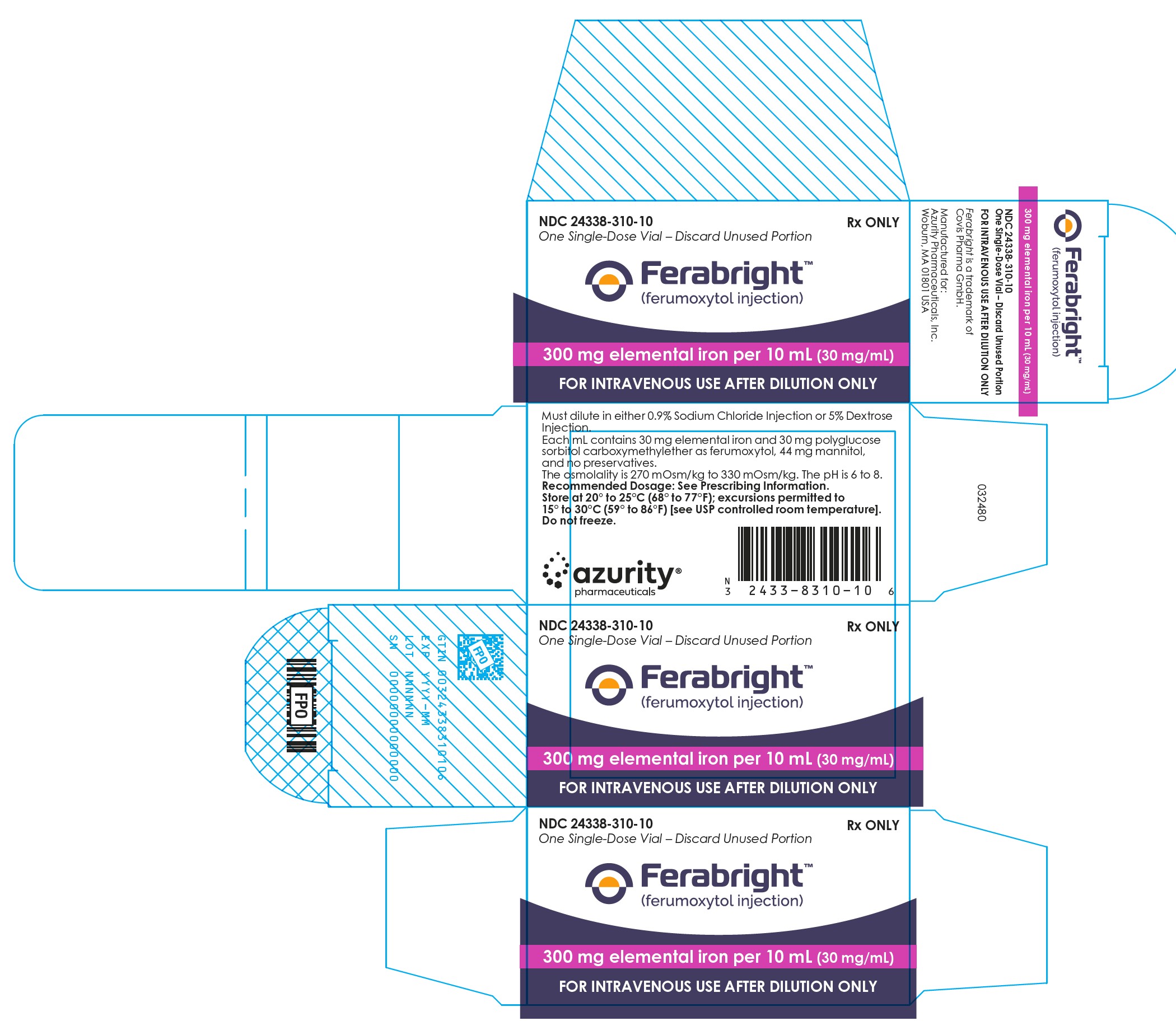
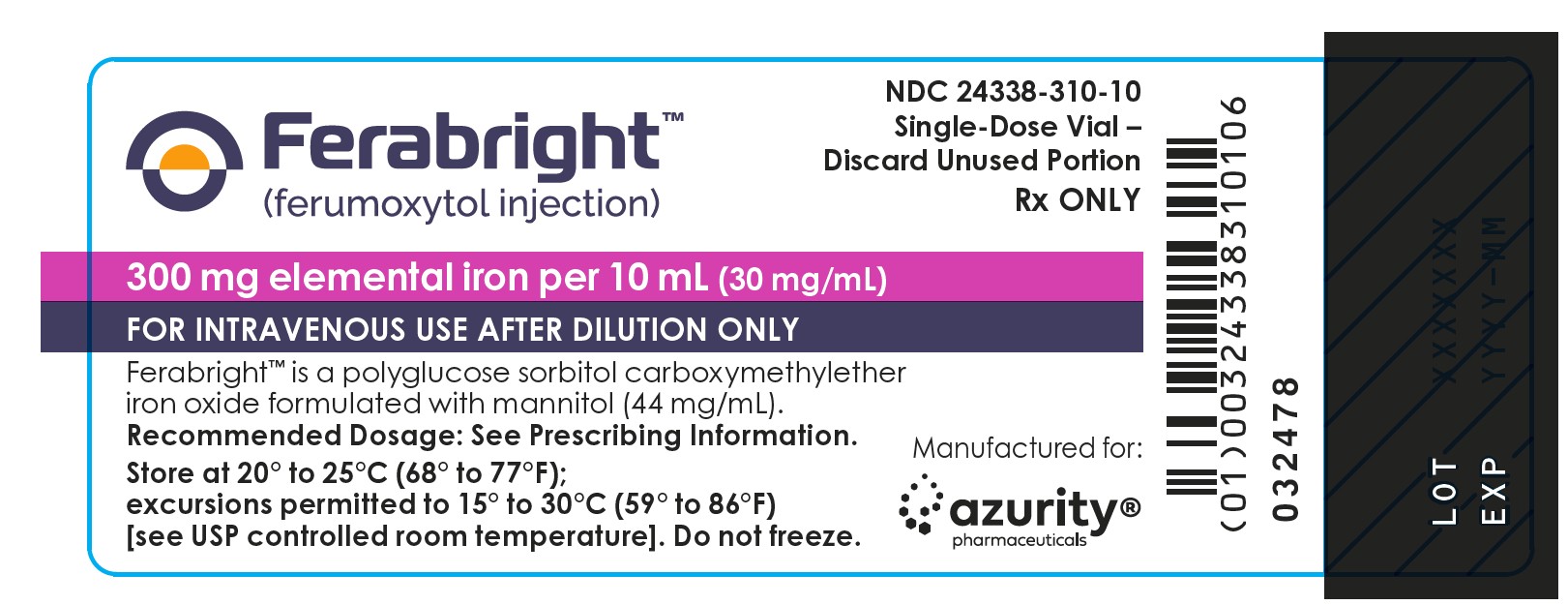
NDC: 24338-310-10 Rx ONLY
Single-Dose Vial – Discard Unused PortionFerabrightTM
(ferumoxytol injection)300 mg elemental iron per 10 mL (30 mg/mL)
FOR INTRAVENOUS USE AFTER DILUTION ONLY
-
PRINCIPAL DISPLAY PANEL – 17 mL
NDC: 24338-510-17 Rx ONLY
One Single-Dose Vial – Discard Unused PortionFerabrightTM
(ferumoxytol injection)510 mg elemental iron per 17 mL (30 mg/mL)
FOR INTRAVENOUS USE AFTER DILUTION ONLY
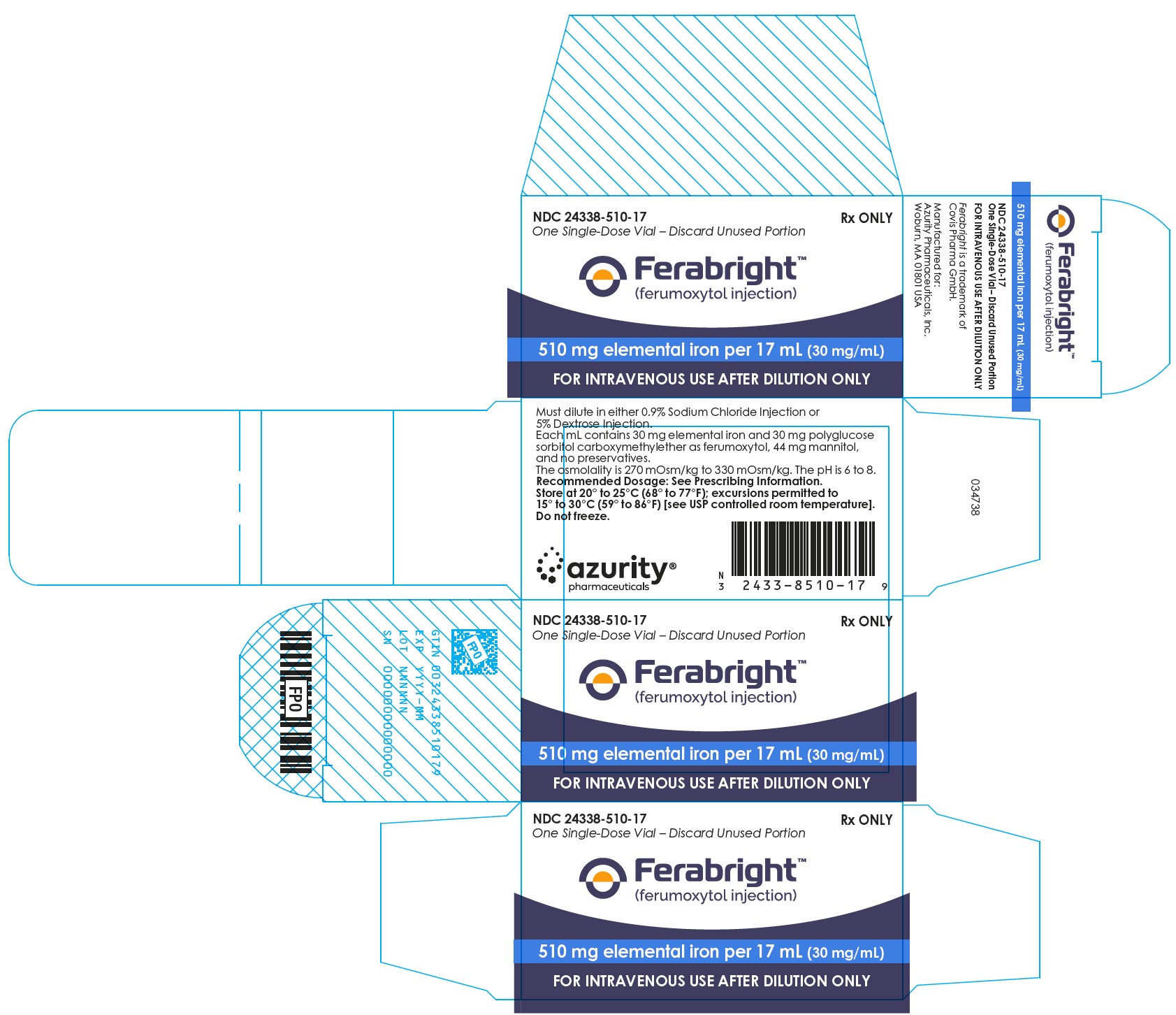
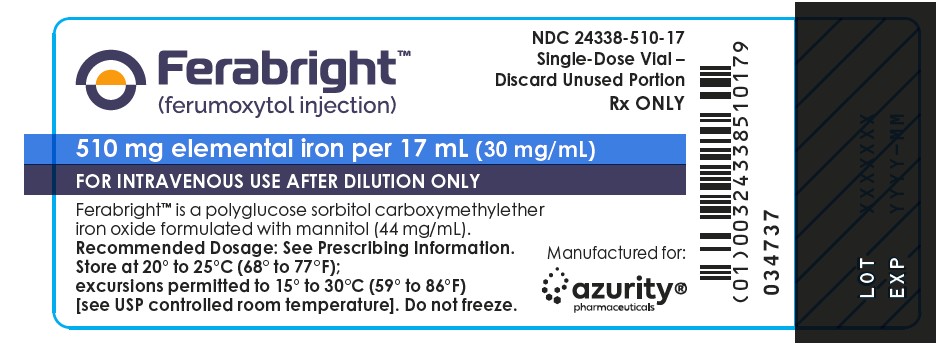
NDC: 24338-510-17 Rx ONLY
Single-Dose Vial – Discard Unused PortionFerabrightTM
(ferumoxytol injection)510 mg elemental iron per 17 mL (30 mg/mL)
FOR INTRAVENOUS USE AFTER DILUTION ONLY
-
INGREDIENTS AND APPEARANCE
FERABRIGHT
ferumoxytol injectionProduct Information Product Type HUMAN PRESCRIPTION DRUG Item Code (Source) NDC: 24338-310 Route of Administration INTRAVENOUS Active Ingredient/Active Moiety Ingredient Name Basis of Strength Strength FERUMOXYTOL (UNII: R8DG7T2D3A) (FERUMOXYTOL NON-STOICHIOMETRIC MAGNETITE - UNII:CLH5FT6412) FERUMOXYTOL NON-STOICHIOMETRIC MAGNETITE 30 mg in 1 mL Inactive Ingredients Ingredient Name Strength MANNITOL (UNII: 3OWL53L36A) Product Characteristics Color BLACK (black to reddish brown) Score Shape Size Flavor Imprint Code Contains Packaging # Item Code Package Description Marketing Start Date Marketing End Date 1 NDC: 24338-310-10 1 in 1 CARTON 10/20/2025 1 10 mL in 1 VIAL, SINGLE-DOSE; Type 0: Not a Combination Product Marketing Information Marketing Category Application Number or Monograph Citation Marketing Start Date Marketing End Date NDA NDA219868 10/20/2025 FERABRIGHT
ferumoxytol injectionProduct Information Product Type HUMAN PRESCRIPTION DRUG Item Code (Source) NDC: 24338-510 Route of Administration INTRAVENOUS Active Ingredient/Active Moiety Ingredient Name Basis of Strength Strength FERUMOXYTOL (UNII: R8DG7T2D3A) (FERUMOXYTOL NON-STOICHIOMETRIC MAGNETITE - UNII:CLH5FT6412) FERUMOXYTOL 30 mg in 1 mL Inactive Ingredients Ingredient Name Strength MANNITOL (UNII: 3OWL53L36A) Product Characteristics Color BLACK (black to reddish brown) Score Shape Size Flavor Imprint Code Contains Packaging # Item Code Package Description Marketing Start Date Marketing End Date 1 NDC: 24338-510-17 1 in 1 CARTON 10/20/2025 1 17 mL in 1 VIAL, SINGLE-DOSE; Type 0: Not a Combination Product Marketing Information Marketing Category Application Number or Monograph Citation Marketing Start Date Marketing End Date NDA NDA219868 10/20/2025 Labeler - Azurity Pharmaceuticals, Inc. (117505635)
Trademark Results [FeraBright]
Mark Image Registration | Serial | Company Trademark Application Date |
|---|---|
 FERABRIGHT 97375194 not registered Live/Pending |
COVIS PHARMA GMBH 2022-04-21 |
© 2026 FDA.report
This site is not affiliated with or endorsed by the FDA.