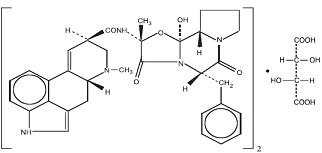
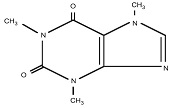
This product contains FD&C Yellow No. 5 (tartrazine) which may cause allergic-type reactions (including bronchial asthma) in certain susceptible persons. Although the overall incidence of FD&C Yellow No. 5 (tartrazine) sensitivity in the general population is low, it is frequently seen in patients who also have aspirin hypersensitivity.
General:
Although signs and symptoms of ergotism rarely develop even after long-term intermittent use of the orally administered drug, care should be exercised to remain within the limits of recommended dosage.
Ergotism is manifested by intense arterial vasoconstriction, producing signs and symptoms of peripheral vascular ischemia. Ergotamine induces vasoconstriction by a direct action on vascular smooth muscle. In chronic intoxication with ergot derivatives, headache, intermittent claudication, muscle pains, numbness, coldness, and pallor of the digits may occur. If the condition is allowed to progress untreated, gangrene can result.
While most cases of ergotism associated with ergotamine treatment result from frank overdosage, some cases have involved apparent hypersensitivity. There are few reports of ergotism among patients taking doses within the recommended limits or for brief periods of time. In rare instances, patients, particularly those who have used the medication indiscriminately over long periods of time, may display withdrawal symptoms consisting of rebound headache upon discontinuation of the drug.
Information for Patients:
Patients should be advised that two tablets of ergotamine tartrate and caffeine tablets should be taken at the first sign of a migraine headache. No more than 6 tablets should be taken for any single migraine attack. No more than 10 tablets should be taken during any 7-day period. Administration of ergotamine tartrate and caffeine tablets should not exceed the dosing guidelines and should not be used for chronic daily administration (see
DOSAGE AND ADMINISTRATION). Ergotamine tartrate and caffeine tablets should be used only for migraine headaches. It is not effective for other types of headaches and it lacks analgesic properties. Patients should be advised to report to the physician immediately any of the following: numbness or tingling in the fingers and toes, muscle pain in the arms and legs, weakness in the legs, pain in the chest or temporary speeding or slowing of the heart rate, swelling or itching.
Drug Interactions:
CYP 3A4 Inhibitors (e.g. Macrolide Antibiotics and Protease Inhibitors)
See
CONTRAINDICATIONS and
WARNINGS.
Ergotamine tartrate and caffeine tablets should not be administered with other vasoconstrictors. Use with sympathomimetics (pressor agents) may cause extreme elevation of blood pressure. The beta-blocker Inderal (propranolol) has been reported to potentiate the vasoconstrictive action of ergotamine tartrate and caffeine tablets by blocking the vasodilating property of epinephrine. Nicotine may provoke vasoconstriction in some patients, predisposing to a greater ischemic response to ergot therapy.
The blood levels of ergotamine-containing drugs are reported to be elevated by the concomitant administration of macrolide antibiotics and vasospastic reactions have been reported with therapeutic doses of the ergotamine-containing drugs when coadministered with these antibiotics.
Pregnancy:
Teratogenic Effects:
Pregnancy Category X: There are no studies on the placental transfer or teratogenicity of the combined products of ergotamine tartrate and caffeine tablets. Caffeine is known to cross the placenta and has been shown to be teratogenic in animals. Ergotamine crosses the placenta in small amounts, although it does not appear to be embryotoxic in this quantity. However, prolonged vasoconstriction of the uterine vessels and/or increased myometrial tone leading to reduced myometrial and placental blood flow may have contributed to fetal growth retardation observed in animals (see
CONTRAINDICATIONS).
Nonteratogenic Effects: Ergotamine tartrate and caffeine tablets are contraindicated in pregnancy due to the oxytocic effects of ergotamine (see
CONTRAINDICATIONS).
Labor and Delivery:
Ergotamine tartrate and caffeine tablets are contraindicated in labor and delivery due to its oxytocic effect which is maximal in the third trimester (see
CONTRAINDICATIONS)
Nursing Mothers:
Ergot drugs are known to inhibit prolactin but there are no reports of decreased lactation with ergotamine tartrate and caffeine tablets. Ergotamine is excreted in breast milk and may cause symptoms of vomiting, diarrhea, weak pulse and unstable blood pressure in nursing infants. Because of the potential for serious adverse reactions in nursing infants from ergotamine tartrate and caffeine tablets, a decision should be made whether to discontinue nursing or discontinue the drug, taking into account the importance of the drug to the mother.
Pediatric Use
Safety and effectiveness in pediatric patients have not been established.