Complete SPL Sections#
WARNING: ADDICTION, ABUSE, AND MISUSE; RISK EVALUATION AND MITIGATION STRATEGY (REMS); LIFE-THREATENING RESPIRATORY DEPRESSION; ACCIDENTAL INGESTION; ULTRA-RAPID METABOLISM OF TRAMADOL AND OTHER RISK FACTORS FOR LIFE-THREATENING RESPIRATORY DEPRESSION IN CHILDREN; NEONATAL OPIOID WITHDRAWAL SYNDROME; INTERACTIONS WITH DRUGS AFFECTING CYTOCHROME P450 ISOENZYMES; and RISKS FROM CONCOMITANT USE WITH BENZODIAZEPINES OR OTHER CNS DEPRESSANTS
BOXED WARNING SECTION
Addiction, Abuse, and Misuse Tramadol hydrochloride extended-release tablets expose patients and other users to the risks of opioid addiction, abuse, and misuse, which can lead to overdose and death. Assess each patient's risk prior to prescribing tramadol hydrochloride extended-release tablets, and monitor all patients regularly for the development of these behaviors and conditions [ see Warnings and Precautions (5.1) ]. Opioid Analgesic Risk Evaluation and Mitigation Strategy (REMS) To ensure that the benefits of opioid analgesics outweigh the risks of addiction, abuse, and misuse, the Food and Drug Administration (FDA) has required a REMS for these products [ see Warnings and Precautions (5.2) ]. Under the requirements of the REMS, drug companies with approved opioid analgesic products must make REMS-compliant education programs available to healthcare providers. Healthcare providers are strongly encouraged to complete a REMS-compliant education program, counsel patients and/or their caregivers, with every prescription, on safe use, serious risks, storage, and disposal of these products, emphasize to patients and their caregivers the importance of reading the Medication Guide every time it is provided by their pharmacist, and consider other tools to improve patient, household, and community safety. Life-Threatening Respiratory Depression Serious, life-threatening, or fatal respiratory depression may occur with use of tramadol hydrochloride extended-release tablets. Monitor for respiratory depression, especially during initiation of tramadol hydrochloride extended-release tablets or following a dose increase. Instruct patients to swallow tramadol hydrochloride extended-release tablets intact, and not to cut, break, chew, crush, or dissolve the tablets to avoid exposure to a potentially fatal dose of tramadol [ see Warnings and Precautions (5.3) ]. Accidental Ingestion Accidental ingestion of even one dose of tramadol hydrochloride extended-release tablet, especially by children, can result in a fatal overdose of tramadol [ see Warnings and Precautions (5.3) ]. Ultra-Rapid Metabolism Of Tramadol And Other Risk Factors For Life-Threatening Respiratory Depression In Children Life-threatening respiratory depression and death have occurred in children who received tramadol. Some of the reported cases followed tonsillectomy and/or adenoidectomy; in at least one case, the child had evidence of being an ultra-rapid metabolizer of tramadol due to a CYP2D6 polymorphism [ see Warnings and Precautions (5.4) ]. Tramadol hydrochloride extended-release tablets are contraindicated in children younger than 12 years of age and in children younger than 18 years of age following tonsillectomy and/or adenoidectomy [ see Contraindications (4) ]. Avoid the use of tramadol hydrochloride extended-release tablets in adolescents 12 to 18 years of age who have other risk factors that may increase their sensitivity to the respiratory depressant effects of tramadol. [ see Warnings and Precautions (5.4) ] Neonatal Opioid Withdrawal Syndrome Prolonged use of tramadol hydrochloride extended-release tablets during pregnancy can result in neonatal opioid withdrawal syndrome, which may be life-threatening if not recognized and treated, and requires management according to protocols developed by neonatology experts. If opioid use is required for a prolonged period in a pregnant woman, advise the patient of the risk of neonatal opioid withdrawal syndrome and ensure that appropriate treatment will be available [ see Warnings and Precautions (5.5) ]. Interactions with Drugs Affecting Cytochrome P450 Isoenzymes The effects of concomitant use or discontinuation of cytochrome P450 3A4 inducers, 3A4 inhibitors, or 2D6 inhibitors with tramadol are complex. Use of cytochrome P450 3A4 inducers, 3A4 inhibitors, or 2D6 inhibitors with tramadol hydrochloride extended-release tablets requires careful consideration of the effects on the parent drug, tramadol, and the active metabolite, M1 [ see Warnings and Precautions (5.6), Drug Interactions (7) ]. Risks From Concomitant Use With Benzodiazepines Or Other CNS Depressants Concomitant use of opioids with benzodiazepines or other central nervous system (CNS) depressants, including alcohol, may result in profound sedation, respiratory depression, coma, and death [ see Warnings and Precautions (5.7), Drug Interactions (7) ]. Reserve concomitant prescribing of tramadol hydrochloride extended-release injection and benzodiazepines or other CNS depressants for use in patients for whom alternative treatment options are inadequate. Limit dosages and durations to the minimum required. Follow patients for signs and symptoms of respiratory depression and sedation.
1 INDICATIONS AND USAGE
INDICATIONS & USAGE SECTION
Tramadol hydrochloride extended-release tablets are indicated for the management of pain severe enough to require daily, around-the-clock, long-term opioid treatment and for which alternative treatment options are inadequate. Limitations of Use Because of the risks of addiction, abuse, and misuse with opioids, even at recommended doses, and because of the greater risks of overdose and death with extended-release opioid formulations [ see Warnings and Precautions (5.1) ], reserve tramadol hydrochloride extended-release tablets for use in patients for whom alternative treatment options (e.g., non-opioid analgesics or immediate-release opioids) are ineffective, not tolerated, or would be otherwise inadequate to provide sufficient management of pain. Tramadol hydrochloride extended-release tablets are not indicated as an as-needed (prn) analgesic.
2 DOSAGE AND ADMINISTRATION
DOSAGE & ADMINISTRATION SECTION
3 DOSAGE FORMS AND STRENGTHS
DOSAGE FORMS & STRENGTHS SECTION
Extended-release tablets are available as: 100 mg tablets: White, round shape, biconvex, beveled edge, coated tablet with release portal on the center of the tablet on any one side, imprinted “531” with black ink on one side and plain on other side. 200 mg tablets: White, round shape, biconvex, beveled edge, coated tablet with release portal on the center of the tablet on any one side, imprinted “533” with black ink on one side and plain on other side. 300 mg tablets: White, round shape, biconvex, beveled edge, coated tablet with release portal on the center of the tablet on any one side, imprinted “537” with black ink on one side and plain on other side.
4 CONTRAINDICATIONS
CONTRAINDICATIONS SECTION
Tramadol hydrochloride extended-release tablets are contraindicated for: all children younger than 12 years of age [ see Warnings and Precautions (5.4) ] post-operative management in children younger than 18 years of age following tonsillectomy and/or adenoidectomy [ see Warnings and Precautions (5.4) ]. Tramadol hydrochloride extended-release tablets are also contraindicated in patients with: Significant respiratory depression [ see Warnings and Precautions (5.3) ] Acute or severe bronchial asthma in an unmonitored setting or in the absence of resuscitative equipment [ see Warnings and Precautions (5.12) ] Known or suspected gastrointestinal obstruction, including paralytic ileus [ see Warnings and Precautions (5.15) ] Hypersensitivity to tramadol (e.g., anaphylaxis) [ see Warnings and Precautions (5.16), Adverse Reactions (6.2) ] Concurrent use of monoamine oxidase inhibitors (MAOIs) or use within the last 14 days [see Drug Interactions (7)] .
5 WARNINGS AND PRECAUTIONS
WARNINGS AND PRECAUTIONS SECTION
6 ADVERSE REACTIONS
ADVERSE REACTIONS SECTION
The following serious adverse reactions are described in greater detail, in other sections: Addiction, Abuse, and Misuse [see Warnings and Precautions ( 5.1 )] Life-Threatening Respiratory Depression [see Warnings and Precautions ( 5.3 )] Ultra-Rapid Metabolism of Tramadol and Other Risk Factors for Life-Threatening Respiratory Depression in Children [see Warnings and Precautions ( 5.4 )] Neonatal Opioid Withdrawal Syndrome [see Warnings and Precautions ( 5.5 )] Interactions with Benzodiazepines and Other CNS Depressants [see Warnings and Precautions ( 5.7 )] Serotonin Syndrome [see Warnings and Precautions ( 5.8 )] Seizures [see Warnings and Precautions ( 5.9 )] Suicide [see Warnings and Precautions ( 5.10 )] Adrenal Insufficiency [see Warnings and Precautions ( 5.11 )] Severe Hypotension [see Warnings and Precautions ( 5.13 )] Gastrointestinal Adverse Reactions [see Warnings and Precautions ( 5.15 )] Hypersensitivity Reactions [see Warnings and Precautions( 5.16 )] Withdrawal [see Warnings and Precautions ( 5.17 )]
7 DRUG INTERACTIONS
DRUG INTERACTIONS SECTION
Table 2 includes clinically significant drug interactions with tramadol hydrochloride extended-release tablets. Table 2: Clinically Significant Drug Interactions with Tramadol Hydrochloride Extended-Release Tablets Inhibitors of CYP2D6 Clinical Impact: The concomitant use of tramadol hydrochloride extended-release tablets and CYP2D6 inhibitors may result in an increase in the plasma concentration of tramadol and a decrease in the plasma concentration of M1, particularly when an inhibitor is added after a stable dose of tramadol hydrochloride extended-release tablets is achieved. Since M1 is a more potent µ-opioid agonist, decreased M1 exposure could result in decreased therapeutic effects, and may result in signs and symptoms of opioid withdrawal in patients who had developed physical dependence to tramadol. Increased tramadol exposure can result in increased or prolonged therapeutic effects and increased risk for serious adverse events including seizures and serotonin syndrome. After stopping a CYP2D6 inhibitor, as the effects of the inhibitor decline, the tramadol plasma concentration will decrease and the M1 plasma concentration will increase which could increase or prolong therapeutic effects but also increase adverse reactions related to opioid toxicity, and may cause potentially fatal respiratory depression [see Clinical Pharmacology ( 12.3 )] . Intervention: If concomitant use of a CYP2D6 inhibitor is necessary, follow patients closely for adverse reactions including opioid withdrawal, seizures, and serotonin syndrome. If a CYP2D6 inhibitor is discontinued, consider lowering tramadol hydrochloride extended-release tablets dosage until stable drug effects are achieved. Follow patients closely for adverse events including respiratory depression and sedation. Examples Quinidine, fluoxetine, paroxetine and bupropion Inhibitors of CYP3A4 Clinical Impact: The concomitant use of tramadol hydrochloride extended-release tablets and CYP3A4 inhibitors can increase the plasma concentration of tramadol and may result in a greater amount of metabolism via CYP2D6 and greater levels of M1. Follow patients closely for increased risk of serious adverse events including seizures and serotonin syndrome, and adverse reactions related to opioid toxicity including potentially fatal respiratory depression, particularly when an inhibitor is added after a stable dose of tramadol hydrochloride extended-release tablets is achieved. After stopping a CYP3A4 inhibitor, as the effects of the inhibitor decline, the tramadol plasma concentration will decrease [see Clinical Pharmacology ( 12.3 )] , resulting in decreased opioid efficacy and possibly signs and symptoms of opioid withdrawal in patients who had developed physical dependence to tramadol. Intervention: If concomitant use is necessary, consider dosage reduction of tramadol hydrochloride extended-release tablets until stable drug effects are achieved. Follow patients closely for seizures and serotonin syndrome, and signs of respiratory depression and sedation at frequent intervals. If a CYP3A4 inhibitor is discontinued, consider increasing the tramadol hydrochloride extended-release tablets dosage until stable drug effects are achieved and follow patients for signs and symptoms of opioid withdrawal. Examples Macrolide antibiotics (e.g., erythromycin), azole-antifungal agents (e.g. ketoconazole), protease inhibitors (e.g., ritonavir) CYP3A4 Inducers Clinical Impact: The concomitant use of tramadol hydrochloride extended-release tablets and CYP3A4 inducers can decrease the plasma concentration of tramadol [see Clinical Pharmacology ( 12.3 )] , resulting in decreased efficacy or onset of a withdrawal syndrome in patients who have developed physical dependence to tramadol, [see Warnings and Precautions ( 5.6 )] . After stopping a CYP3A4 inducer, as the effects of the inducer decline, the tramadol plasma concentration will increase [see Clinical Pharmacology ( 12.3 )] , which could increase or prolong both the therapeutic effects and adverse reactions, and may cause seizures and serotonin syndrome, and potentially fatal respiratory depression. Intervention: If concomitant use is necessary, consider increasing the tramadol hydrochloride extended-release tablets dosage until stable drug effects are achieved. Follow patients for signs of opioid withdrawal. If a CYP3A4 inducer is discontinued, consider tramadol hydrochloride extended-release tablets dosage reduction and monitor for seizures and serotonin syndrome, and signs of sedation and respiratory depression. Patients taking carbamazepine, a CYP3A4 inducer, may have a significantly reduced analgesic effect of tramadol. Because carbamazepine increases tramadol metabolism and because of the seizure risk associated with tramadol, concomitant administration of tramadol hydrochloride extended-release tablets and carbamazepine is not recommended. Examples: Rifampin, carbamazepine, phenytoin Benzodiazepines and Other Central Nervous System (CNS) Depressants Clinical Impact: Due to additive pharmacologic effect, the concomitant use of benzodiazepines or other CNS depressants, including alcohol, can increase the risk of hypotension, respiratory depression, profound sedation, coma, and death. Intervention: Reserve concomitant prescribing of these drugs for use in patients for whom alternative treatment options are inadequate. Limit dosages and durations to the minimum required. Follow patients closely for signs of respiratory depression and sedation [see Warnings and Precautions ( 5.7 )] . If concomitant use is warranted, consider prescribing naloxone for the emergency treatment of opioid overdose [see Dosage and Administration (2.2), Warnings and Precautions (5.1, 5.3, 5.7)]. Examples: Benzodiazepines and other sedatives/hypnotics, anxiolytics, tranquilizers, muscle relaxants, general anesthetics, antipsychotics, other opioids, alcohol. Serotonergic Drugs Clinical Impact: The concomitant use of opioids with other drugs that affect the serotonergic neurotransmitter system has resulted in serotonin syndrome . Intervention: If concomitant use is warranted, carefully observe the patient, particularly during treatment initiation and dose adjustment. Discontinue tramadol hydrochloride extended-release tablets if serotonin syndrome is suspected. Examples: Selective serotonin reuptake inhibitors (SSRIs), serotonin and norepinephrine reuptake inhibitors (SNRIs), tricyclic antidepressants (TCAs), triptans, 5-HT3 receptor antagonists, drugs that affect the serotonin neurotransmitter system (e.g., mirtazapine, trazodone, tramadol), certain muscle relaxants (i.e., cyclobenzaprine, metaxalone), monoamine oxidase (MAO) inhibitors (those intended to treat psychiatric disorders and also others, such as linezolid and intravenous methylene blue). Monoamine Oxidase Inhibitors (MAOIs) Clinical Impact: MAOI interactions with opioids may manifest as serotonin syndrome [see Warnings and Precautions ( 5.8 )] or opioid toxicity (e.g., respiratory depression, coma) [see Warnings and Precautions ( 5.3 )]. Intervention: Do not use tramadol hydrochloride extended-release tablets in patients taking MAOIs or within 14 days of stopping such treatment. Examples: phenelzine, tranylcypromine, linezolid Mixed Agonist/Antagonist and Partial Agonist Opioid Analgesics Clinical Impact: May reduce the analgesic effect of tramadol hydrochloride extended-release tablets and/or precipitate withdrawal symptoms. Intervention: Avoid concomitant use. Examples: butorphanol, nalbuphine, pentazocine, buprenorphine Muscle Relaxants Clinical Impact: Tramadol may enhance the neuromuscular blocking action of skeletal muscle relaxants and produce an increased degree of respiratory depression. Intervention: Monitor patients for signs of respiratory depression that may be greater than otherwise expected and decrease the dosage of tramadol hydrochloride extended-release tablets and/or the muscle relaxant as necessary. Due to the risk o...
8 USE IN SPECIFIC POPULATIONS
USE IN SPECIFIC POPULATIONS SECTION
9 DRUG ABUSE AND DEPENDENCE
DRUG ABUSE AND DEPENDENCE SECTION
10 OVERDOSAGE
OVERDOSAGE SECTION
Clinical Presentation Acute overdosage with tramadol hydrochloride extended-release tablets can be manifested by respiratory depression, somnolence progressing to stupor or coma, skeletal muscle flaccidity, cold and clammy skin, constricted pupils, and, in some cases, pulmonary edema, bradycardia, QT prolongation, hypotension, partial or complete airway obstruction, atypical snoring, and death. Marked mydriasis rather than miosis may be seen with hypoxia in overdose situations [see Clinical Pharmacology ( 12.2 )] . Treatment of Overdose In case of overdose, priorities are the reestablishment of a patent and protected airway and institution of assisted or controlled ventilation, if needed. Employ other supportive measures (including oxygen and vasopressors) in the management of circulatory shock and pulmonary edema as indicated. Cardiac arrest or arrhythmias will require advanced life-support techniques. Opioid antagonists, such as naloxone, are specific antidotes to respiratory depression resulting from opioid overdose. For clinically significant respiratory or circulatory depression secondary to tramadol overdose, administer an opioid antagonist. While naloxone will reverse some, but not all, symptoms caused by overdosage with tramadol, the risk of seizures is also increased with naloxone administration. In animals, convulsions following the administration of toxic doses of tramadol hydrochloride extended-release tablets could be suppressed with barbiturates or benzodiazepines but were increased with naloxone. Naloxone administration did not change the lethality of an overdose in mice. Hemodialysis is not expected to be helpful in an overdose because it removes less than 7% of the administered dose in a 4-hour dialysis period. Because the duration of opioid reversal is expected to be less than the duration of action of tramadol in tramadol hydrochloride extended-release tablets, carefully monitor the patient until spontaneous respiration is reliably reestablished. Tramadol hydrochloride extended-release tablets will continue to release tramadol and add to the tramadol load for 24 to 48 hours or longer following ingestion, necessitating prolonged monitoring. If the response to an opioid antagonist is suboptimal or only brief in nature, administer additional antagonist as directed by the product’s prescribing information. In an individual physically dependent on opioids, administration of the recommended usual dosage of the antagonist will precipitate an acute withdrawal syndrome. The severity of the withdrawal symptoms experienced will depend on the degree of physical dependence and the dose of the antagonist administered. If a decision is made to treat serious respiratory depression in the physically dependent patient, administration of the antagonist should be initiated with care and by titration with smaller than usual doses of the antagonist.
11 DESCRIPTION
DESCRIPTION SECTION
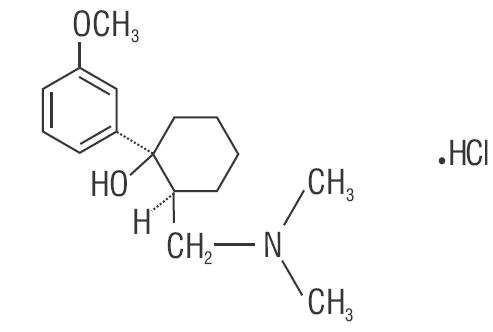
Tramadol hydrochloride is an opioid agonist in an extended-release tablet formulation for oral use. The chemical name is (±) cis -2-[(dimethylamino) methyl]-1-(3-methoxyphenyl) cyclohexanol hydrochloride. Its structural formula is: The molecular weight of tramadol hydrochloride is 299.84. It is a white, crystalline powder that is freely soluble in water and methanol, very slightly soluble in acetone and has a pKa of 9.41. The n-octanol/water log partition coefficient (logP) is 1.35 at pH 7. Tramadol hydrochloride extended-release tablets contain 100 mg, 200 mg or 300 mg of tramadol hydrochloride, USP in an extended-release formulation. The tablets are white in color and contain the inactive ingredients pregelatinized maize starch, hypromellose, mannitol, magnesium stearate, cellulose acetate and polyethylene glycol. Imprinting ink contains, shellac glaze, iron oxide black, N-butyl alcohol, ammonium hydroxide and propylene glycol.
12 CLINICAL PHARMACOLOGY
CLINICAL PHARMACOLOGY SECTION
13 NONCLINICAL TOXICOLOGY
NONCLINICAL TOXICOLOGY SECTION
14 CLINICAL STUDIES
CLINICAL STUDIES SECTION
Clinical Trial Experience Tramadol hydrochloride extended-release tablets were studied in patients with chronic, moderate to moderately severe pain due to osteoarthritis and/or low back pain in four 12-week, randomized, double-blind, placebo-controlled trials. To qualify for inclusion into these studies, patients were required to have moderate to moderately severe pain as defined by a pain intensity score of ≥40 mm, off previous medications, on a 0 to 100 mm visual analog scale (VAS). Adequate evidence of efficacy was demonstrated in the following two studies: Study 1 : Osteoarthritis of the Knee and/or Hip In one 12-week randomized, double-blind, placebo-controlled study, patients with moderate to moderately severe pain due to osteoarthritis of the knee and/or hip were administered doses from 100 mg to 400 mg daily. Treatment was initiated at 100 mg QD for four days then increased by 100 mg per day increments every five days to the randomized fixed dose. Between 51% and 59% of patients in the tramadol hydrochloride extended-release tablets treatment groups completed the study and 56% of patients in the placebo group completed the study. Discontinuations due to adverse events were more common in the tramadol hydrochloride extended-release tablets 200 mg, 300 mg and 400 mg treatment groups (20%, 27%, and 30% of discontinuations, respectively) compared to 14% of the patients treated with tramadol hydrochloride extended-release tablets 100 mg and 10% of patients treated with placebo. Pain, as assessed by the WOMAC Pain subscale, was measured at 1, 2, 3, 6, 9, and 12 weeks and change from baseline assessed. A responder analysis based on the percent change in WOMAC Pain subscale demonstrated a statistically significant improvement in pain for the 100 mg and 200 mg treatment groups compared to placebo (see Figure 2). Study 2: Osteoarthritis of the Knee In one 12-week randomized, double-blind, placebo-controlled flexible-dosing trial of tramadol hydrochloride extended-release tablets in patients with osteoarthritis of the knee, patients titrated to an average daily tramadol hydrochloride extended-release tablets dose of approximately 270 mg/day. Forty-nine percent of patients randomized to tramadol hydrochloride extended-release tablets completed the study, while 52% of patients randomized to placebo completed the study. Most of the early discontinuations in the tramadol hydrochloride extended-release tablets treatment group were due to adverse events, accounting for 27% of the early discontinuations in contrast to 7% of the discontinuations from the placebo group. Thirty-seven percent of the placebo-treated patients discontinued the study due to lack of efficacy compared to 15% of tramadol hydrochloride extended-release tablets-treated patients. The tramadol hydrochloride extended-release tablets group demonstrated a statistically significant decrease in the mean VAS score, and a statistically significant difference in the responder rate, based on the percent change from baseline in the VAS score, measured at 1, 2, 4, 8, and 12 weeks, between patients receiving tramadol hydrochloride extended-release tablets and placebo (see Figure 3).
16 HOW SUPPLIED/STORAGE AND HANDLING
HOW SUPPLIED SECTION
Tramadol hydrochloride extended-release tablets are supplied in the following package and dose strength forms: 300 mg: White, round shape, biconvex, beveled edge, coated tablet with release portal on the center of the tablet on any one side, imprinted “537” with black ink on one side and plain on other side. Bottles of 30's with Child Resistant Cap ……………... NDC 68071-2732-3 Store at 20° to 25°C (68° to 77°F); excursions permitted between 15° and 30°C (59° and 86°F) [see USP Controlled Room Temperature]. Dispense in a tight, light resistant container. Warning: keep out of reach of children. Store tramadol hydrochloride extended-release tablets securely and dispose of properly [see Patient Counseling Information (17) ].
17 PATIENT COUNSELING INFORMATION
INFORMATION FOR PATIENTS SECTION
Advise the patient to read the FDA-approved patient labeling (Medication Guide). Storage and Disposal Because of the risks associated with accidental ingestion, misuse, and abuse, advise patients to store tramadol hydrochloride extended-release tablets securely, out of sight and reach of children, and in a location not accessible by others, including visitors to the home [see Warnings and Precautions (5.1), Drug Abuse And Dependence (9.3)] . Inform patients that leaving tramadol hydrochloride extended-release tablets unsecured can pose a deadly risk to others in the home. Advise patients and caregivers that when medicines are no longer needed, they should be disposed of promptly. Inform patients that medicine take-back options are the preferred way to safely dispose of most types of unneeded medicines. If no take back programs or DEA-registered collectors are available, instruct patients to dispose of tramadol hydrochloride extended-release tablets by following these four steps: Mix tramadol hydrochloride extended-release tablets (do not crush) with an unpalatable substance such as dirt, cat litter, or used coffee grounds; Place the mixture in a container such as a sealed plastic bag; Throw the container in the household trash; Delete all personal information on the prescription label of the empty bottle Inform patients that they can visit www.fda.gov/drugdisposa l for additional information on disposal of unused medicines. Addiction, Abuse, and Misuse Inform patients that the use of tramadol hydrochloride extended-release tablets, even when taken as recommended, can result in addiction, abuse, and misuse, which can lead to overdose and death [see Warnings and Precautions (5.1)]. Instruct patients not to share tramadol hydrochloride extended-release tablets with others and to take steps to protect tramadol hydrochloride extended-release tablets from theft or misuse. Life-Threatening Respiratory Depression Inform patients of the risk of life-threatening respiratory depression, including information that the risk is greatest when starting tramadol hydrochloride extended-release tablets or when the dosage is increased, and that it can occur even at recommended dosages. Educate patients and caregivers on how to recognize respiratory depression and emphasize the importance of calling 911 or getting emergency medical help right away in the event of a known or suspected overdose [see Warnings and Precautions (5.3)] . Patient Access to Naloxone for the Emergency Treatment of Opioid Overdose Discuss with the patient and caregiver the availability of naloxone for the emergency treatment of opioid overdose, both when initiating and renewing treatment with tramadol hydrochloride extended-release tablets. Inform patients and caregivers about the various ways to obtain naloxone as permitted by individual state naloxone dispensing and prescribing requirements or guidelines (e.g., by prescription, directly from a pharmacist, or as part of a community-based program) [see Dosage and Administration ((2.2), Warnings and Precautions (5.3)]. Educate patients and caregivers on how to recognize the signs and symptoms of an overdose. Explain to patients and caregivers that naloxone’s effects are temporary, and that they must call 911 or get emergency medical help right away in all cases of known or suspected opioid overdose, even if naloxone is administered [ see Overdosage (10)]. If naloxone is prescribed, also advise patients and caregivers: How to treat with naloxone in the event of an opioid overdose To tell family and friends about their naloxone and to keep it in a place where family and friends can access it in an emergency To read the Patient Information (or other educational material) that will come with their naloxone. Emphasize the importance of doing this before an opioid emergency happens, so the patient and caregiver will know what to do. Accidental Ingestion Inform patients that accidental ingestion, especially by children, may result in respiratory depression or death [see Warnings and Precautions (5.3)] . Ultra-Rapid Metabolism of Tramadol and Other Risk Factors for Life-threatening Respiratory Depression in Children Advise caregivers that tramadol hydrochloride extended-release tablets are contraindicated in children younger than 12 years of age and in children younger than 18 years of age following tonsillectomy and/or adenoidectomy. Advise caregivers of children 12 to 18 years of age receiving tramadol hydrochloride extended-release tablets to monitor for signs of respiratory depression [see Warnings and Precautions (5.4)] . Interactions with Benzodiazepines and Other CNS Depressants Inform patients and caregivers that potentially fatal additive effects may occur if tramadol hydrochloride extended-release tablets are used with benzodiazepines or other CNS depressants, including alcohol, and not to use these concomitantly unless supervised by a healthcare provider [see Warnings and Precautions (5.7), Drug Interactions (7)]. Serotonin Syndrome Inform patients that tramadol could cause a rare but potentially life-threatening condition, particularly during concomitant use with serotonergic drugs. Warn patients of the symptoms of serotonin syndrome and to seek medical attention right away if symptoms develop. Instruct patients to inform their healthcare provider if they are taking, or plan to take serotonergic medications [see Warnings and Precautions (5.8), Drug Interactions (7)] . Seizures Inform patients that tramadol hydrochloride extended-release tablets may cause seizures with concomitant use of serotonergic agents (including SSRIs, SNRIs, and triptans) or drugs that significantly reduce the metabolic clearance of tramadol [see Warnings and Precautions (5.9)] . MAOI Interaction Inform patients not to take tramadol hydrochloride extended-release tablets while using any drugs that inhibit monoamine oxidase. Patients should not start MAOIs while taking tramadol hydrochloride extended-release tablets [see Drug Interactions (7)]. Adrenal Insufficiency Inform patients that opioids could cause adrenal insufficiency, a potentially life-threatening condition. Adrenal insufficiency may present with non-specific symptoms and signs such as nausea, vomiting, anorexia, fatigue, weakness, dizziness, and low blood pressure. Advise patients to seek medical attention if they experience a constellation of these symptoms [see Warnings and Precautions (5.11)] . Important Administration Instructions Instruct patients how to properly take tramadol hydrochloride extended-release tablets, including the following: Tramadol hydrochloride extended-release tablets are designed to work properly only if swallowed intact. Taking cut, broken, chewed, crushed, or dissolved tramadol hydrochloride extended-release tablets can result in a fatal overdose [see Dosage and Administration (2.1)]. Advise patients not to exceed the single-dose and 24-hour dose limit and the time interval between doses, since exceeding these recommendations can result in respiratory depression, seizures, hepatic toxicity, and death. [see Dosage and Administration (2.1)]. Do not discontinue tramadol hydrochloride extended-release tablets without first discussing the need for a tapering regimen with the prescriber [see Dosage and Administration (2.5)] . Important Discontinuation Instructions In order to avoid developing withdrawal symptoms, instruct patients not to discontinue tramadol hydrochloride extended-release tablets without first discussing a tapering plan with the prescriber [see Dosage and Administration (2.5) ]. Hypotension Inform patients that tramadol hydrochloride extended-release tablets may cause orthostatic hypotension and syncope. Instruct patients how to recognize symptoms of low blood pressure and how to reduce the risk of serious consequences should hypotension occur (e.g., sit or lie down, carefully rise from a sitting or lying position) [see Warnings and Precautions (5.13)] . Anaphylaxis I...
MEDICATION GUIDE
SPL MEDGUIDE SECTION
Tramadol Hydrochloride (tram a dol hye droe klor ide) Extended-Release Tablets, CIV Tramadol hydrochloride extended-release tablet is: A strong prescription pain medicine that contains an opioid (narcotic) that is used to manage pain severe enough to require daily around-the-clock, long-term treatment with an opioid, when other pain treatments such as non-opioid pain medicines or immediate release opioid medicines do not treat your pain well enough or you cannot tolerate them. A long-acting (extended-release) opioid pain medicine that can put you at risk for overdose and death. Even if you take your dose correctly as prescribed you are at risk for opioid addiction, abuse, and misuse that can lead to death. Not for use to treat pain that is not around-the-clock. Important information about tramadol hydrochloride extended-release tablets: Get emergency help or call 911 right away if you take too much tramadol hydrochloride extended-release tablets (overdose). When you first start taking tramadol hydrochloride extended-release tablets, when your dose is changed, or if you take too much (overdose), serious or life-threatening breathing problems that can lead to death may occur. Talk to your healthcare provider about naloxone, a medicine for the emergency treatment of an opioid overdose. Taking tramadol hydrochloride extended-release tablets with other opioid medicines, benzodiazepines, alcohol, or other central nervous system depressants (including street drugs) can cause severe drowsiness, decreased awareness, breathing problems, coma, and death. Never give anyone else your tramadol hydrochloride extended-release tablets. They could die from taking them. Selling or giving away tramadol hydrochloride extended-release tablets is against the law. Store tramadol hydrochloride extended-release tablets securely, out of sight and reach of children, and in a location not accessible by others, including visitors to the home. Important Information Guiding Use in Pediatric Patients: Do not give tramadol hydrochloride extended-release tablets to a child younger than 12 years of age. Do not give tramadol hydrochloride extended-release tablets to a child younger than 18 years of age after surgery to remove the tonsils and/or adenoids. Avoid giving tramadol hydrochloride extended-release tablets to children between 12 to 18 years of age who have risk factors for breathing problems such as obstructive sleep apnea, obesity, or underlying lung problems. Do not take tramadol hydrochloride extended-release tablets if you have: severe asthma, trouble breathing, or other lung problems. a bowel blockage or have narrowing of the stomach or intestines. Before taking tramadol hydrochloride extended-release tablets, tell your healthcare provider if you have a history of: head injury, seizures ● liver, kidney, thyroid problems problems urinating ● pancreas or gallbladder problems abuse of street or prescription drugs, alcohol addiction, opioid overdose, or mental health problems. Tell your healthcare provider if you are: pregnant or planning to become pregnant. Prolonged use of tramadol hydrochloride extended-release tablets during pregnancy can cause withdrawal symptoms in your newborn baby that could be life-threatening if not recognized and treated. breastfeeding. Not recommended; it may harm your baby. living in a household where there are small children or someone who has abused street or prescription drugs taking prescription or over-the-counter medicines, vitamins, or herbal supplements. Taking tramadol hydrochloride extended-release tablets with certain other medicines can cause serious side effects that could lead to death. When taking tramadol hydrochloride extended-release tablets: Do not change your dose. Take tramadol hydrochloride extended-release tablets exactly as prescribed by your healthcare provider. Use the lowest dose possible for the shortest time needed. Take your prescribed dose once a day at the same time every day. Do not take more than your prescribed dose. If you miss a dose, take your next dose at your usual time. Swallow tramadol hydrochloride extended-release tablet whole. Do not cut, break, chew, crush, dissolve, snort, or inject tramadol hydrochloride extended-release tablet because this may cause you to overdose and die. Call your healthcare provider if the dose you are taking does not control your pain. Do not stop taking tramadol hydrochloride extended-release tablets without talking to your healthcare provider. Dispose of expired, unwanted, or unused tramadol hydrochloride extended-release tablets by taking your drug to an authorized DEA-registered collector or drug take-back program. If one is not available, you can dispose of tramadol hydrochloride extended-release tablets by mixing the product with dirt, cat litter, or coffee grounds; placing the mixture in a sealed plastic bag, and throwing the bag in your trash. While taking tramadol hydrochloride extended-release tablets DO NOT: Drive or operate heavy machinery, until you know how tramadol hydrochloride extended-release tablets affect you. Tramadol hydrochloride extended-release tablets can make you sleepy, dizzy, or lightheaded. Drink alcohol or use prescription or over-the-counter medicines that contain alcohol. Using products containing alcohol during treatment with tramadol hydrochloride extended-release tablets may cause you to overdose and die. The possible side effects of tramadol hydrochloride extended-release tablets: constipation, nausea, sleepiness, vomiting, tiredness, headache, dizziness, abdominal pain, seizure. Call your healthcare provider if you have any of these symptoms and they are severe. Get emergency medical help or call 911 right away, if you have: trouble breathing, shortness of breath, fast heartbeat, chest pain, swelling of your face, tongue, or throat, extreme drowsiness, light-headedness when changing positions, feeling faint, agitation, high body temperature, trouble walking, stiff muscles, or mental changes such as confusion. These are not all the possible side effects of tramadol hydrochloride extended-release tablets. Call your doctor for medical advice about side effects. You may report side effects to FDA at 1-800-FDA-1088. For more information go to dailymed.nlm.nih.gov or call 1-800-818-4555 . This Medication Guide has been approved by the U.S. Food and Drug Administration. Distributed by: Sun Pharmaceutical Industries, Inc. Cranbury, NJ 08512 Manufactured by: Sun Pharmaceutical Industries Ltd. Halol-Baroda Highway, Halol-389 350, Gujarat, India. ISS: 06/2021 5221235
PACKAGE LABEL.PRINCIPAL DISPLAY PANEL